

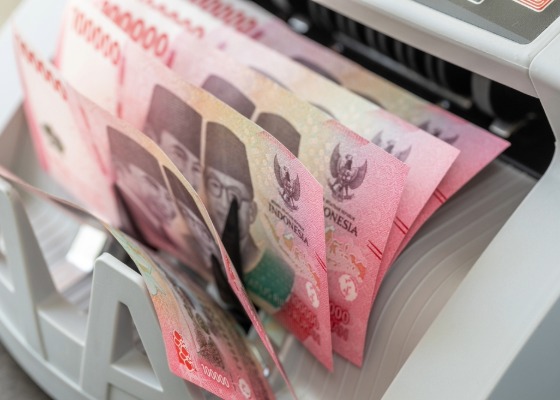
PELAKITA.ID – Whenever the rupiah begins a steep descent or the Jakarta stock exchange sees a wave of foreign exits, the same specter inevitably returns to haunt the headlines: the 1997-98 Asian Financial Crisis.
For many investors, the memory of that era—marked by collapsing banks and soaring debt—remains the primary lens through which they view Indonesian instability.
Recent market turbulence has reignited these comparisons. The rupiah has hit record lows, and foreign outflows have rattled the local market.
However, any seasoned observer knows that the current anxiety is not fueled by the same structural rot that existed three decades ago. Today’s banks are robust, public debt is moderate, and foreign-exchange reserves are far larger than in the late nineties.
The real danger facing Indonesia today is not an explosive crisis of fragility, but a “slow-motion loss of macro credibility.”
The threat is born of policy complacency—a gradual erosion of the institutional safeguards and fiscal discipline that served as the nation’s bedrock for twenty years.
In the global theater of finance, credibility is Indonesia’s most valuable asset. Today, it is being gambled away in favor of short-term ambition and an increasingly visible impatience with established rules.
It’s Not a Crisis, It’s a “Repricing” of Trust
The current market reaction is best understood not as a panic over economic weakness, but as a “repricing” of Indonesia’s policy framework.
For two decades, Indonesia’s primary comparative advantage among emerging markets was not spectacular growth, but its macroeconomic credibility.
This hard-won reputation allowed the country to overcome significant structural flaws—such as a thin tax base and regulatory hurdles—because investors trusted the predictability of its management.
Markets are now punishing Indonesia more severely than many of its peers. While external factors like a strong US dollar affect everyone, the divergence in Indonesia’s performance is a signal that investors are flagging a crisis of direction rather than a crisis of numbers.
“Indonesia is not being punished because it is fragile in the old sense. It is being repriced because markets are beginning to question the reliability of its macroeconomic policy framework.”
This repricing reflects a growing skepticism about whether the government still views fiscal and monetary orthodoxy as binding constraints or merely optional guidelines that can be discarded when they become inconvenient.
The Fiscal “Slippage” and the Danger of the “Off-Budget” Shadow
Fiscal governance is the first area where this credibility is fraying. A wave of large spending commitments—including energy subsidies, food programs, and ambitious growth targets—has raised urgent questions about sustainability.
A focal point of concern is the Danantara Sumberdaya Indonesia initiative.
By centralizing strategic commodity exports through a state-linked entity, the government risks signaling that private contracts are subordinate to state direction. Without clear rules, such moves reinforce the perception that policy can change abruptly, creating a “risk premium” for any entity doing business in the country.
Even more concerning is the lure of “quasi-fiscal” or “off-budget” spending. Because Indonesia’s revenue base remains thin, there is a constant tension between high-spending ambitions and fiscal reality.
Attempting to hide the true fiscal burden through off-budget mechanisms is a high-stakes gamble. While these maneuvers may temporarily obscure the cost of government programs, markets eventually uncover the hidden debt, leading to a sharp and painful loss of confidence.
The Dilution of Central Bank Independence
The second major signal of eroding credibility lies in the institutional shifts surrounding Bank Indonesia (BI). Recent amendments to the financial-sector law have expanded the central bank’s mandate beyond price and exchange-rate stability to include “real-sector growth and job creation.”
However, the most significant “red flag” for institutional analysts is the increased power of parliament to evaluate the central bank and revise the mechanisms for removing its board.
This political encroachment suggests that monetary policy may be pulled closer to short-term political objectives.
“In an emerging market with a history of a currency instability, monetary credibility is hard to build and easy to lose. Once markets believe the central bank may be pressured to accommodate fiscal expansion, the currency risk premium rises.”
When the independence of the central bank—one of the pillars of post-1998 stability—is perceived to be under pressure, the very anchor that has kept the Indonesian economy steady for decades begins to drag.
The “Low Bar” Comparison
Indonesian policymakers often dismiss market pressures by pointing out that the country is in better shape than many of its neighbors. This is a dangerous form of “low bar” thinking. Indonesia is not Thailand in 1997, nor is it Turkey or Argentina. But “not being in default” is a poor metric for a country that aspires to be a global economic leader.
The true benchmark for Indonesia is its own hard-won reputation for orthodox management. By straying from these principles, the government is perceived to be ignoring the very “lessons of crisis” it once championed:
- Protecting the Central Bank: Maintaining clear boundaries between politics and monetary policy.
- Controlling Deficits: Ensuring spending remains within the bounds of sustainable revenue.
- Managing Debt Prudently: Avoiding opaque financing and “sudden experiments.”
- Predictability Over Discretion: Prioritizing stable rules over abrupt, interventionist policy shifts.
Growth Requires Productivity, Not Pressure
The government’s desire for 8% growth is understandable, but it cannot be achieved through sheer force of will or by stretching the budget to its breaking point. The current impatience with fiscal and institutional constraints is a distraction from the slow, difficult work of structural reform.
Sustainable growth is a product of increased productivity, not increased political pressure on financial institutions. To reach its targets, the government must move away from discretion and toward a “course correction” based on:
- Tax System Improvements: Deepening the revenue base to fund social programs sustainably.
- Deepening Competition: Opening sectors to drive efficiency and innovation.
- Regulatory Certainty: Creating a stable environment for long-term private investment.
- Human Capital Investment: Focusing on the long-term quality of the workforce.
Conclusion: The High Price of Rebuilding Trust
Indonesia does not need to panic, but it must urgently address its complacency. The current market signals are a warning that the country’s comparative advantage—its credibility—is being squandered.
Credibility is not an obstacle to growth; it is the essential foundation upon which any sustainable 8% growth target must be built.
To restore confidence, the government must reaffirm its commitment to fiscal rules, publish transparent financing plans, and vigorously protect the operational independence of Bank Indonesia from parliamentary interference.
The cost of maintaining a good reputation is often high, requiring discipline when it is politically inconvenient. However, as history repeatedly demonstrates, the cost of losing one is far higher. If trust continues to erode, Indonesia will find that rebuilding its reputation is a far more expensive endeavor than preserving it.
Source: HERE