
Nikkel Village offers an impressive example of how social capital is built, maintained, and strengthened through agricultural traditions. The si’e system exemplifies community resilience; the peyong ritual reinforces cultural unity; and partnerships with rice traders and PT Vale through PKPM Terfokus—supported by The COMMIT Foundation—illustrate how external institutions can complement local knowledge without eroding tradition.
PELAKITA.ID – Nikkel Village in the Nuha Sub-district of East Luwu offers a powerful illustration of how agricultural traditions and community relationships form the foundation of social capital in rural Indonesia.
Surrounded by fertile land and shaped by longstanding cultural practices, the village has preserved a rich system of cooperation, trust, and shared norms that continues to guide agricultural life today.
While modern economic actors—such as rice traders, PT Vale, and local facilitators—are increasingly involved in shaping livelihoods, the community’s social capital remains anchored in its deep-rooted traditions, especially through the si’e (lumbung) system and its harvest rituals.
These traditions demonstrate that social capital is not an abstract idea but a living practice embedded in everyday agricultural life.
Si’e: A Symbol of Trust, Cooperation, and Agricultural Memory
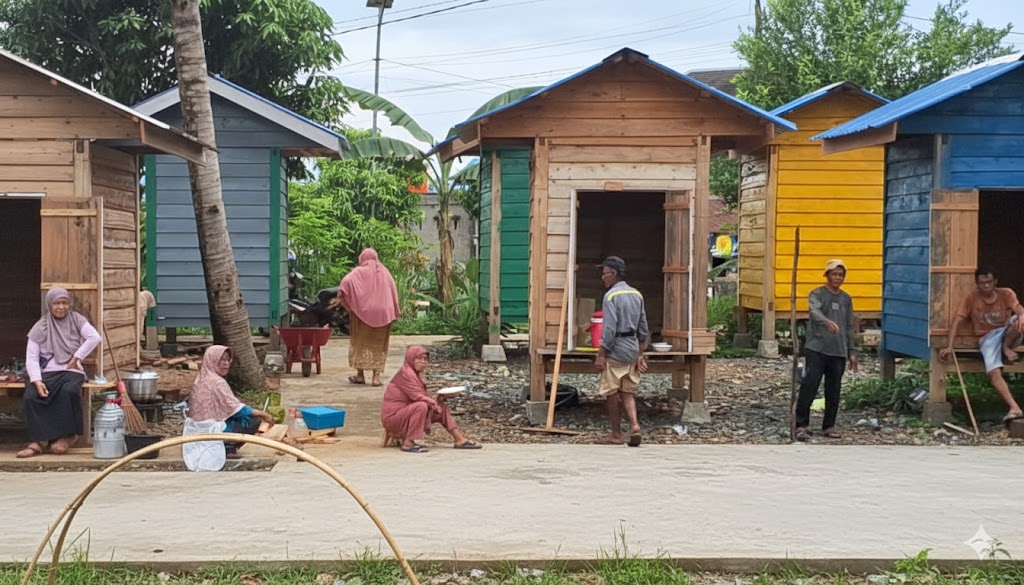
One of the most striking features of Nikkel Village is the abundance of si’e—small elevated buildings used to store rice after harvest. These structures reflect the community’s agricultural identity and collective memory. Traditionally built using wood and palm materials, si’e symbolize self-sufficiency, shared labor, and long-term household security.
From a social capital perspective, the si’e embody several key dimensions:
Bonding Social Capital (within the community).
Families and neighbors often work together to build and maintain si’e, reinforcing the tradition of gotong royong. This shared effort strengthens social cohesion and cultivates norms of reciprocity. When one family builds a new si’e, others join voluntarily, trusting that support will be returned when needed.
Bridging Social Capital (across groups).
The si’e system facilitates interactions between farmers and rice traders. The secure storage system gives traders confidence in the quality and quantity of rice being produced, lowering transaction costs and strengthening long-term business ties.
Linking Social Capital (connections to institutions).
In recent years, linking social capital has expanded significantly in Nikkel. Under the PKPM Terfokus scheme, PT Vale financed the construction of 22 new si’e across the village.
This initiative was implemented and facilitated on the ground by The COMMIT Foundation, ensuring coordination with community members, farmer groups, and local leaders.
These newly built si’e not only increase local food security but also demonstrate how development partnerships can reinforce, rather than replace, indigenous knowledge. The PKPM Terfokus program strengthens cultural heritage while improving agricultural resilience through institutional support.

Harvest Ritual and Peyong: Strengthening Community Identity
Another integral expression of social capital in Nikkel Village is its harvest celebration, marked by the communal preparation of peyong—rice cooked inside bamboo over fire for nearly four hours.
The making of peyong is a collective ritual involving coordination, shared time, and labor. Men prepare bamboo tubes, women wash and season the rice, and groups take turns maintaining the fire.
This ritual reinforces several core elements of social capital:
Shared Norms and Values.
For the people of Nikkel, the harvest is not merely an economic milestone—it is a cultural event that honors the land, ancestors, and the collective effort that produced the rice. Eating peyong together signifies gratitude, unity, and the importance of working as a community.
Trust-Building Through Ritual.
The celebration brings together farmers, village leaders, youth, elders, rice traders, and sometimes representatives from PT Vale or local programs. The shared meal reduces social distance across groups and strengthens relational trust.
Intergenerational Learning.
Young villagers learn traditional agricultural ethics, stories of ancestors, and the cultural significance of the si’e through participating in the peyong ritual. This transfer of knowledge ensures the continuity of social capital across generations.
Networks Linking Farmers, Traders, and PT Vale
The agricultural ecosystem of Nikkel Village is supported by multiple interconnected actors. Farmers maintain long-standing ties with rice traders who buy their harvest and provide access to regional markets. These relationships rest on strong interpersonal trust—often without formal contracts.
Vertical relationships with PT Vale have become even more pronounced. The company’s PKPM Terfokus initiative and its decision to finance 22 new si’e show a commitment to strengthening the agricultural and cultural fabric of the community.
Through its partnership, The COMMIT Foundation played a key facilitating role, ensuring that the process was inclusive, community-led, and culturally aligned.
This triangular network—farmers, traders, and PT Vale—illustrates how social capital can be expanded through development cooperation, combining traditional practices with institutional support.
Social Norms and Agricultural Ethics
The strength of social capital in Nikkel is rooted in the community’s norms and values that govern agricultural life, including:
-
Sharing rice during scarcity, especially when families face crop failure.
-
Honesty in negotiations, maintaining fair relations with traders and avoiding exploitation even without written agreements.
-
Following the ethical rhythm of harvest, including observing taboo days and respecting seasons.
-
Maintaining the si’e as cultural heritage, honoring ancestors and preserving agricultural dignity.
These values encourage cooperation, discourage conflict, and create a predictable social environment for farming.
A Living Model of Social Capital in Rural Indonesia
Nikkel Village offers an impressive example of how social capital is built, maintained, and strengthened through agricultural traditions.
The si’e system exemplifies community resilience; the peyong ritual reinforces cultural unity; and partnerships with rice traders and PT Vale through PKPM Terfokus—supported by The COMMIT Foundation—illustrate how external institutions can complement local knowledge without eroding tradition.
With 22 newly built si’e, the village now has not only expanded food security but also reaffirmed its cultural identity and social cohesion.
Nikkel demonstrates that development is most effective when grounded in relationships, trust, and shared values—reminding us that social capital remains one of the strongest foundations for sustainable rural livelihoods.
___
Written by Kamaruddin Azis, Founder Pelakita.ID