
PELAKITA.ID – On a humid afternoon at Sudut Merah’ Red Corner’, a charming Makassar café, conversations about coffee gave way to something more consequential: economic reform, public accountability, environmental taxation, regional budgets, and Indonesia’s uncertain development trajectory.
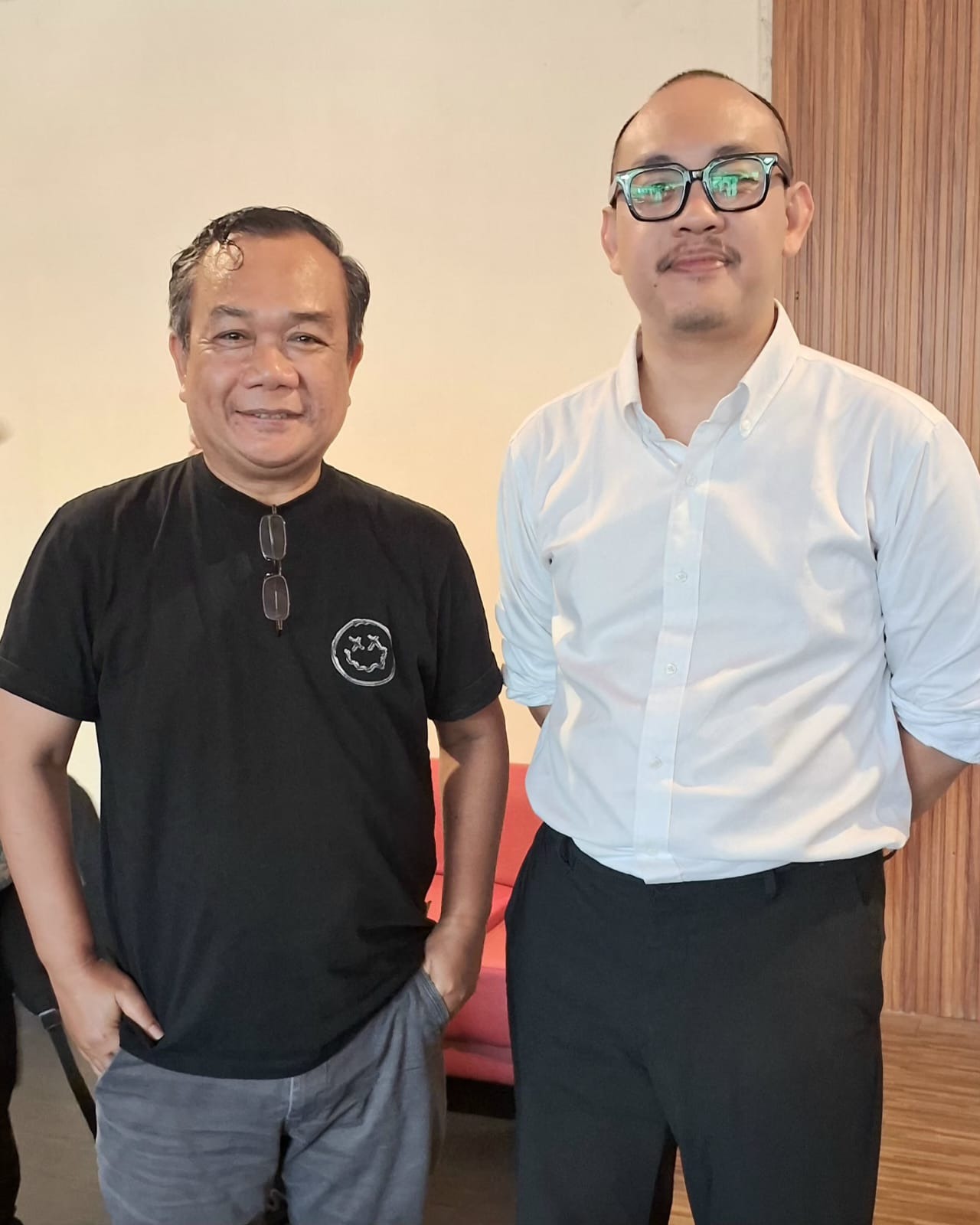
The forum, organized by CIDES ICMI South Sulawesi, featured Bhima Yudhistira Adhinegara, founder and Director of the Center of Economic and Law Studies (CELIOS), whose work reflects Indonesia’s growing generation of researcher-activists.
Bhima occupies an increasingly important intellectual space: between rigorous research and public advocacy. Rather than allowing complex economic data to remain inside academic circles, he translates evidence into arguments that citizens and policymakers can understand.
His approach raises a fundamental question: what happens when research stops being merely an academic product and becomes an instrument for challenging power, questioning decisions, and influencing the direction of national policy?
Research Must Move Beyond the Paper
For Bhima, research should never end as a report, presentation, or PDF quietly stored in a digital archive. Its real value begins when evidence helps society understand problems and scrutinize policy choices.
“Research is not just the production of academic documents, but an instrument to read the direction of policy and provide input for public decisions.”
That philosophy requires researchers to move beyond describing numbers. They must explain why those numbers matter, who benefits, who loses, and what consequences may emerge from decisions made behind bureaucratic doors.
In this sense, research becomes a form of public accountability. Evidence gives citizens a stronger position to question government priorities, challenge conventional assumptions, and demand policies grounded in reality rather than political convenience.
One of the central issues discussed in Makassar was the idea of a Green Tax. Beyond generating state revenue, taxation can become a powerful instrument for changing economic behavior and addressing environmental costs.
The principle is straightforward: activities that generate significant environmental damage should reflect those costs more clearly in economic decisions, encouraging businesses and consumers to consider cleaner and more sustainable alternatives.
Yet a green transition cannot simply transfer environmental costs to ordinary citizens. If poorly designed, green taxation could disproportionately burden low-income households while allowing wealthier groups to absorb or avoid additional costs.
That makes Green Tax more than an environmental or fiscal instrument. It becomes a question of social justice, asking how economic transformation can protect nature without deepening inequality.
APBD Reveals a Region’s Priorities
Bhima’s reading of regional budgets offers another provocative perspective. An APBD is not merely a spreadsheet containing billions of rupiah; it represents choices about which problems deserve attention and which communities receive priority.
Every budget reflects values. When governments prioritize prestigious infrastructure while basic healthcare, education, sanitation, or vulnerable communities remain underserved, accounting numbers begin to reveal something deeper about political priorities.
Reading an APBD therefore requires more than examining its total size. Citizens must ask where public money goes, who receives the greatest benefits, and whether spending genuinely responds to the needs of local communities.
Public budgets ultimately become development blueprints. They reveal whether leadership is primarily concerned with visibility, political legacy, administrative convenience, or the everyday welfare of citizens.
Bhima’s intellectual journey also offers a lesson about the power of early literacy. His interest in research reportedly developed remarkably young, when scientific papers and structured knowledge were already becoming part of his intellectual environment.
That early habit eventually supported his academic journey through Universitas Gadjah Mada and the University of Bradford, where he pursued a Master’s degree in Finance through the LPDP scholarship program.
His professional path included experience at INDEF, involvement with Kadin during 2015–2020, and eventually the establishment of CELIOS in 2017, creating a platform for independent economic and policy research.
His trajectory suggests that intellectual authority rarely appears suddenly. It is accumulated through years of reading, questioning, writing, researching, comparing evidence, and developing the courage to challenge comfortable assumptions.
In an age of information overload, this habit becomes increasingly valuable. The ability to distinguish evidence from opinion, analysis from propaganda, and facts from convenient narratives may be one of society’s most important intellectual defenses.
The Tamiya Method of Mental Balance
Perhaps the most unexpected dimension of Bhima’s personality is his passion for Mini 4WD racing, commonly known as Tamiya. At first glance, the hobby seems distant from macroeconomics, fiscal policy, and national reform.
Yet there is an intriguing connection. Tuning a Tamiya requires precision, balance, experimentation, and constant adjustment. Weight, motor speed, friction, aerodynamics, and configuration can determine whether the car stays fast and stable.
Economic policy requires similar discipline. Governments cannot simply pursue maximum growth without considering inequality, environmental sustainability, fiscal stability, and long-term social consequences.
Tamiya therefore becomes more than entertainment. It offers a simple metaphor for intellectual balance: build, test, observe, adjust, and try again rather than assuming the first configuration will always work.
For professionals working under constant pressure, such hobbies can also create valuable mental distance. Sometimes, stepping away from complicated national problems allows the mind to return with greater clarity.
The gathering at Red Corner Cafe, ultimately represented more than a conversation about economics. It brought national policy debates into direct contact with the concerns, expectations, and intellectual energy of Indonesia’s regions.
National policies eventually become local realities. Taxes affect households, regional budgets shape public services, energy decisions influence living costs, and environmental policies determine the quality of communities’ air, water, and surroundings.
This is why economics should not remain a closed conversation among technocrats. It belongs in the public square, where citizens can question assumptions, examine budgets, challenge policies, and demand evidence.
The deeper message from Makassar was clear: knowledge becomes meaningful when it helps people understand the forces shaping their lives and gives them the confidence to participate in public debate.
Bhima’s journey—from an early fascination with research to building CELIOS, challenging economic policies, discussing Green Tax, and racing Tamiya—offers an unexpected lesson about intellectual life.
Perhaps the common thread is simple: read reality carefully, question decisions courageously, and maintain balance while doing both.
For Indonesia, facing rapid economic, environmental, technological, and geopolitical changes, that combination may be more valuable than ever. Research must not merely describe the future; it should help society shape it.
___
Author Kamaruddin Azis, founder Pelakita.ID