

She emphasized Indonesia’s legal rights and sovereignty while maintaining dialogue with neighboring countries and international partners. This balance between assertiveness and diplomacy underscores the importance of strategic thinking in leadership: achieving goals without isolating allies or provoking unnecessary conflict.
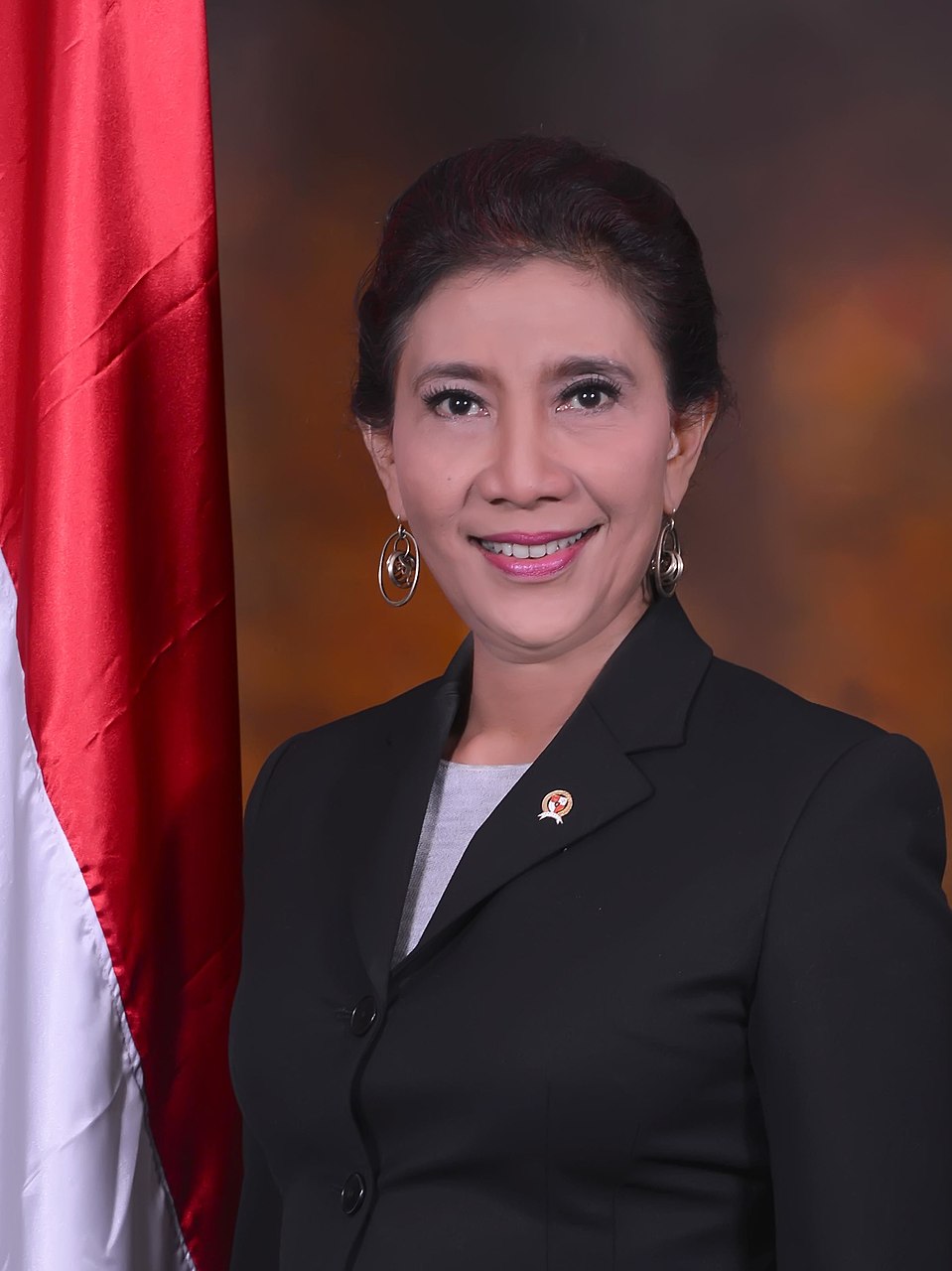
PELAKITA.ID – Susi Pudjiastuti’s tenure as Indonesia’s Minister of Marine Affairs and Fisheries from 2014 to 2019 remains one of the most remarkable examples of bold, transformative, and unconventional leadership in the modern Indonesian government.
Known for her no-nonsense approach, hands-on management style, and fierce commitment to marine conservation and national sovereignty, Susi’s leadership offers valuable lessons for public administration, environmental management, and strategic governance worldwide.
By examining her approach, decisions, and principles, we can extract lessons that extend beyond the realm of fisheries to broader themes of leadership, innovation, and ethical governance.
1. Visionary Leadership and Clear Purpose
Susi’s leadership was rooted in a clear, compelling vision: to protect Indonesia’s marine resources, assert the nation’s maritime sovereignty, and ensure sustainable livelihoods for local communities.
At the onset of her tenure, illegal fishing was rampant, and Indonesia’s territorial waters were being overexploited by foreign vessels. Susi recognized that without decisive action, the country’s fisheries sector—which employs millions and contributes significantly to national GDP—was at risk of collapse.
Her vision extended beyond mere enforcement. She promoted marine conservation, sustainable fisheries, and modernization of the sector, creating a balance between economic development and environmental stewardship.
A key lesson here is that effective leadership begins with a clearly defined purpose that aligns both organizational and national interests. By communicating this vision consistently, Susi mobilized her ministry, stakeholders, and the public to support reforms that were once considered politically risky.
2. Courage and Decisiveness in Enforcement
Susi Pudjiastuti’s hallmark was her fearless approach to illegal fishing. She implemented the now-famous policy of sinking illegal foreign fishing vessels operating in Indonesian waters—a measure that sent shockwaves through the international fishing industry.
This decisive action demonstrated that leadership often requires making tough, bold decisions that others might shy away from due to diplomatic or political pressures.
Her enforcement strategy combined strict deterrence with transparency and public accountability. She ensured that the policy was widely communicated and supported by evidence of violations, reducing the possibility of corruption or selective enforcement.
From this, leaders can learn that courage, coupled with clarity and transparency, can transform institutional credibility and effectiveness.
3. Hands-On and Non-Traditional Management Style
Unlike many bureaucrats who rely solely on hierarchical structures and formal reporting, Susi was known for her hands-on approach. She personally visited fishing ports, monitored operations, and engaged directly with fishermen.
This on-the-ground involvement allowed her to gain a realistic understanding of the challenges and opportunities within the sector.
Susi’s approach challenges conventional management wisdom by emphasizing action over formality. Leaders can learn that visibility, accessibility, and direct engagement with frontline operations foster trust, improve decision-making, and enhance organizational responsiveness.
Her unconventional style also extended to communications: she used social media, public interviews, and informal channels to reach citizens directly, making her leadership relatable and transparent.
4. Innovation and Modernization
Recognizing that illegal fishing and low productivity were partly due to outdated practices, Susi prioritized technological and institutional innovation. She promoted the use of modern monitoring systems, including vessel tracking, satellite surveillance, and digital reporting, to better manage fisheries and combat illegal activities.
Additionally, she encouraged local communities to adopt sustainable fishing practices and supported programs that enhanced the value chain of fishery products.
Her focus on innovation shows that effective leadership is not just about enforcement but also about creating systems that enable long-term efficiency and sustainability.
Leaders across sectors can draw inspiration from this proactive approach to modernizing institutions, leveraging technology, and empowering local stakeholders.
5. Integrity and Ethical Governance
Integrity was central to Susi’s leadership. She fought corruption within her ministry and in the fisheries sector, understanding that the credibility of policies depends on the ethical conduct of those enforcing them.
By publicly highlighting cases of corruption and taking action against violators, she set a high standard for accountability in public service.
Her example reinforces the idea that ethical leadership is non-negotiable. Leaders who uphold integrity and consistently model ethical behavior can build public trust, motivate teams, and create a culture of accountability that endures beyond their tenure.
6. Stakeholder Engagement and Inclusive Leadership
While known for her toughness on illegal fishing, Susi also emphasized collaboration with local communities, NGOs, and the private sector.
She recognized that sustainable fisheries management requires cooperation, shared responsibility, and the integration of local knowledge. Programs aimed at improving fishermen’s welfare, training in sustainable practices, and empowering small-scale operators reflect her inclusive approach to leadership.
This highlights that strong leadership balances authority with empathy. Engaging stakeholders inclusively ensures that reforms are grounded in reality, socially acceptable, and sustainable over the long term.
7. Communication and Public Relations
Susi’s leadership was amplified by her exceptional communication skills. She was adept at using media to inform, educate, and persuade the public about the importance of protecting Indonesia’s marine resources. By combining clear messaging with visible action, she cultivated public support for her policies.
The lesson here is that communication is an essential tool for leaders. Policies, no matter how well designed, require public understanding and buy-in to succeed. Leaders must articulate their vision, explain their rationale, and engage audiences consistently to achieve impact.
8. Balancing Boldness with Strategic Diplomacy
While her vessel-sinking policy drew international attention and occasional diplomatic friction, Susi navigated these challenges with strategic diplomacy.
She emphasized Indonesia’s legal rights and sovereignty while maintaining dialogue with neighboring countries and international partners. This balance between assertiveness and diplomacy underscores the importance of strategic thinking in leadership: achieving goals without isolating allies or provoking unnecessary conflict.
Conclusion
Minister Susi Pudjiastuti’s leadership of Indonesia’s Ministry of Marine Affairs and Fisheries offers a multifaceted blueprint for effective, transformative leadership. Her tenure exemplifies the power of vision, courage, integrity, innovation, and stakeholder engagement.
She demonstrates that leadership is not merely about occupying a position of authority but about taking responsibility for bold decisions, engaging directly with stakeholders, modernizing institutions, and maintaining ethical standards.
The broader lesson extends beyond fisheries: transformational leadership requires a blend of decisiveness, empathy, creativity, and resilience.
By embracing these principles, leaders in any sector can navigate complex challenges, implement meaningful reforms, and leave a lasting impact on both their organizations and society. Susi Pudjiastuti’s legacy reminds us that effective leadership is as much about bold action as it is about moral clarity, innovation, and a relentless commitment to a higher purpose.
References
-
“Minister Susi Pudjiastuti recognised as champion for oceans.” ANTARA News, 17 Sept 2016. Antara News.
-
“Susi Pudjiastuti receives WWF Leaders for a Living Planet Award.” WWF‑Indonesia, 18 Sept 2016, WWF Indonesia
-
“Minister Susi claims award for her ‘hard‑line stance’ against poaching.” The Jakarta Post, 7 June 2017.
-
“Trends in Marine Resources and Fisheries Management in Indonesia: A 2018 Review.” Packard Foundation report.
-
“Peran Kepemimpinan Susi Pudjiastuti dalam Membangun Integritas dan Kemandirian Maritim Nasional.” Jurnal Multidisiplin Ilmu Akademik, Universitas Maritim Raja Ali Haji.
-