
A defining feature of Vietnam’s approach is its embrace of nature-based production systems, particularly the mangrove–shrimp farming model. In coastal areas, shrimp ponds are integrated with mangrove forests, allowing ecological processes to support aquaculture. Mangroves act as natural biofilters, stabilizing water quality and reducing pollution.
PELAKITA.ID – Vietnam’s shrimp industry is widely recognized today as one of the most dynamic and adaptive aquaculture sectors in the world.
Once associated with environmental degradation, disease outbreaks, and volatile productivity, the sector has undergone a remarkable transformation toward sustainability. As highlighted by VNSeafoodInsider, this transition did not occur overnight, nor was it driven by a single innovation.
Instead, it emerged from a convergence of ecological awareness, market pressure, technological innovation, and institutional support. For readers concerned with the future of aquaculture—particularly in shrimp-producing countries—Vietnam offers valuable lessons on how sustainability can become a pathway to resilience and competitiveness rather than a constraint.
One of the most important lessons from Vietnam is the recognition that sustainability is no longer optional.
Global seafood markets, especially in Europe, North America, and Japan, increasingly demand proof of responsible production. Environmental, social, and governance standards have become decisive factors in market access.
Vietnam’s shrimp sector responded by repositioning sustainability not as a moral obligation alone, but as a strategic necessity. Producers realized that without improving environmental performance, reducing antibiotic use, and ensuring traceability, they would gradually lose their competitive edge.
Sustainability, in this context, became an economic strategy as much as an environmental one.
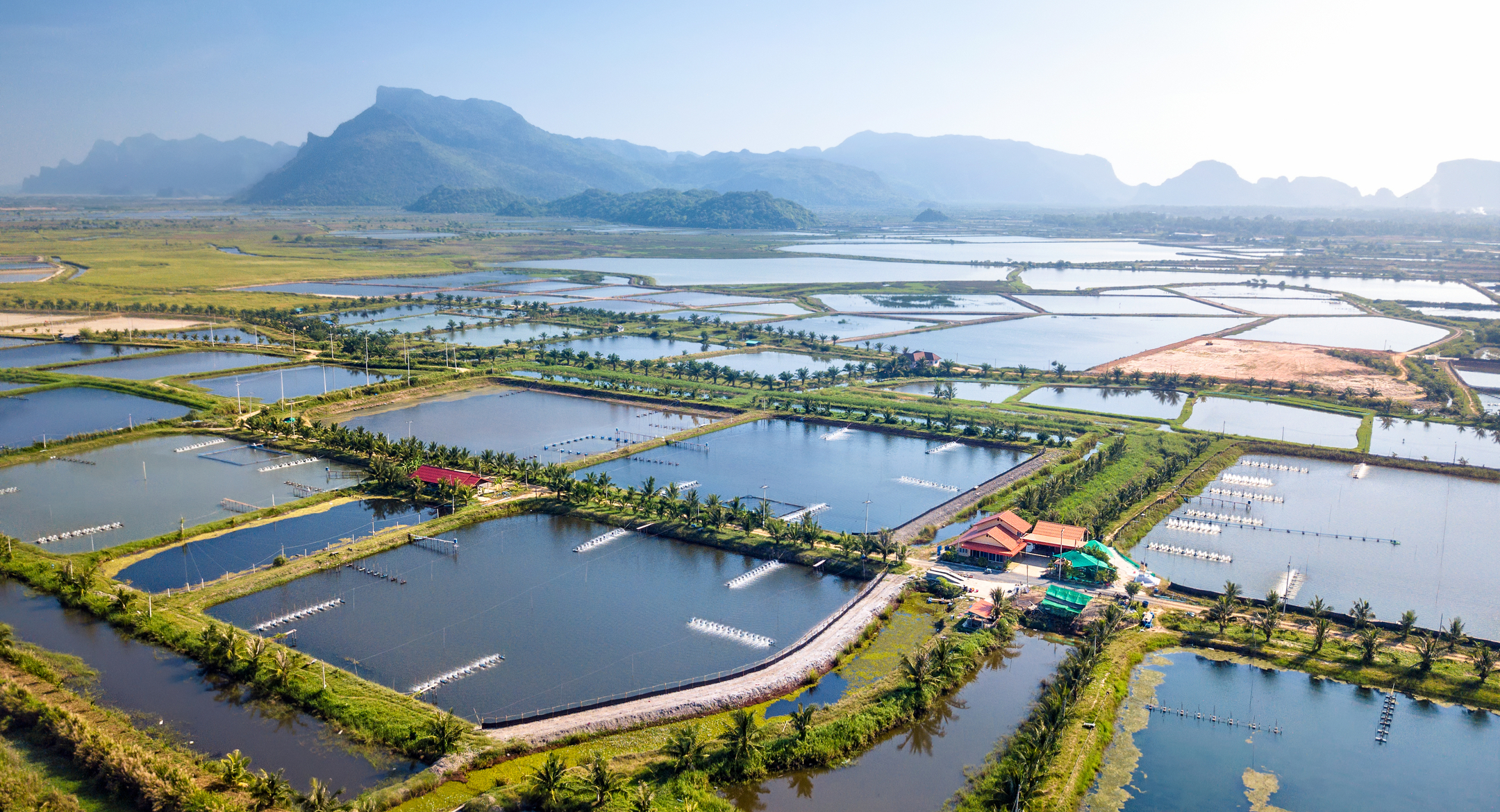
A defining feature of Vietnam’s approach is its embrace of nature-based production systems, particularly the mangrove–shrimp farming model. In coastal areas, shrimp ponds are integrated with mangrove forests, allowing ecological processes to support aquaculture. Mangroves act as natural biofilters, stabilizing water quality and reducing pollution.
At the same time, shrimp raised in these systems tend to be healthier and less vulnerable to disease.
For farmers, this model reduces dependence on chemicals and artificial feed while opening access to organic and eco-certified markets. The broader lesson is clear: working with ecosystems, rather than against them, can generate both environmental and economic benefits.
Technology has also played a crucial role in enabling Vietnam’s sustainable transition. Rather than relying solely on expansion or intensification through higher inputs,
Vietnamese farmers have increasingly adopted technologies that close resource loops. Biofloc systems, for example, use beneficial microorganisms to convert waste into additional feed, dramatically reducing water pollution and feed costs. Closed and recirculating water systems have helped cut water use and minimize effluent discharge into surrounding environments.
The growing use of probiotics and microbial management has further reduced reliance on antibiotics, addressing both environmental concerns and food safety issues.
These innovations demonstrate that sustainability and productivity do not have to be mutually exclusive; when applied appropriately, technology can serve as a bridge between the two.
Another key lesson lies in the importance of certification and traceability. Vietnam has made significant progress in aligning its shrimp production with international standards such as ASC, BAP, GlobalG.A.P., and organic certification schemes.
These certifications are not merely labels; they function as trust-building mechanisms in global value chains. Traceability systems that document shrimp production from pond to plate reassure buyers and consumers about environmental responsibility, labor practices, and product safety.
For producers, certification opens doors to premium markets and price stability. The Vietnamese experience underscores that sustainability must be measurable and verifiable if it is to deliver real market advantages.
Beyond environmental outcomes, sustainable shrimp farming in Vietnam has generated tangible social and economic benefits. Farmers who adopt sustainable practices often experience higher net incomes due to reduced input costs and better market access.
More stable production systems mean fewer catastrophic losses from disease, which has historically been a major cause of indebtedness and vulnerability among shrimp farmers.
At the community level, sustainable aquaculture has helped create more stable employment and encouraged younger generations to remain engaged in coastal livelihoods. This social dimension is critical, reminding readers that sustainability is ultimately about people as much as ecosystems.
Vietnam’s progress also highlights the importance of viewing sustainability through a value-chain lens. Successful transformation did not occur at the farm level alone.
Processors, exporters, feed companies, financial institutions, and government agencies all played complementary roles. Vertical integration helped align production practices with market requirements, while horizontal cooperation among farmers—often through cooperatives—made certification and technology adoption more accessible.
Public–private partnerships supported training, research, and innovation, creating an enabling environment for change. The lesson here is that sustainable aquaculture requires coordination across the entire system, not isolated interventions.
At the same time, Vietnam’s experience reminds us that sustainability is an ongoing process rather than a finished achievement. Challenges remain, including high initial investment costs, disease risks linked to climate variability, and the difficulty small-scale farmers face in meeting certification requirements.
Even environmentally friendly systems such as mangrove–shrimp farming require careful management to avoid organic build-up and declining water quality.
Vietnam’s response has been adaptive rather than complacent, emphasizing continuous learning, farmer training, and incremental improvement. This adaptive mindset is itself a critical lesson for other countries seeking to replicate similar transitions.
Ultimately, the transformation of Vietnam’s shrimp industry offers a compelling narrative for readers concerned with the future of aquaculture.
It shows that sustainability can enhance resilience, profitability, and social well-being when it is embedded into production systems, supported by technology, and reinforced by markets and institutions.
Vietnam’s journey demonstrates that responsible shrimp farming is not only possible but scalable—provided that stakeholders are willing to rethink traditional practices, invest in innovation, and work collaboratively across the value chain.
In an era of climate uncertainty and growing global demand for seafood, these lessons are increasingly relevant far beyond Vietnam’s shores.
Conclusions
There are 5 clear and concise conclusions distilled from the article, written in a style suitable for the closing section or takeaway box of a media or policy piece:
-
Sustainability has become a strategic necessity in shrimp aquaculture.
Vietnam’s experience shows that sustainability is no longer a voluntary or ethical add-on, but a core economic strategy. Meeting environmental, social, and governance standards is essential for maintaining market access, competitiveness, and long-term industry viability in global seafood trade. -
Nature-based production systems strengthen both ecology and productivity.
The integration of shrimp farming with mangrove ecosystems demonstrates that working with natural processes can improve water quality, reduce disease risk, and lower production costs. This approach proves that environmental conservation and profitable aquaculture can reinforce one another. -
Technology enables sustainable intensification rather than expansion.
Innovations such as biofloc systems, water recirculation, and microbial management allow farmers to increase efficiency while reducing pollution, water use, and antibiotic dependency. Vietnam shows that productivity gains do not require higher environmental costs when technology is applied wisely. -
Certification and traceability are critical for building trust and market value.
International standards and transparent traceability systems have helped Vietnam’s shrimp sector access premium markets and stabilize prices. Sustainability delivers real economic benefits only when it is measurable, verifiable, and trusted by buyers and consumers. -
Sustainable transformation requires system-wide collaboration and continuous adaptation.
Vietnam’s success was driven by coordinated efforts across the entire value chain—farmers, processors, government, and private partners—supported by ongoing learning and adaptive management. Sustainability is not a one-time achievement, but a continuous process that must evolve alongside environmental and market challenges.
(KA)