
“PPI must be a center for integrated services for fishermen, not just a place for landing fish. This is where the fisheries ecosystem is built.” — Syahril Abdul Raup
PELAKITA.ID – Step onto a traditional Indonesian fish landing site (PPI), and the senses are met with the visceral grit of diesel, salt, and manual labor.
Yet, on the coast of Palopo, this rustic imagery is being supplanted by a vision of data-driven transparency and logistical precision.
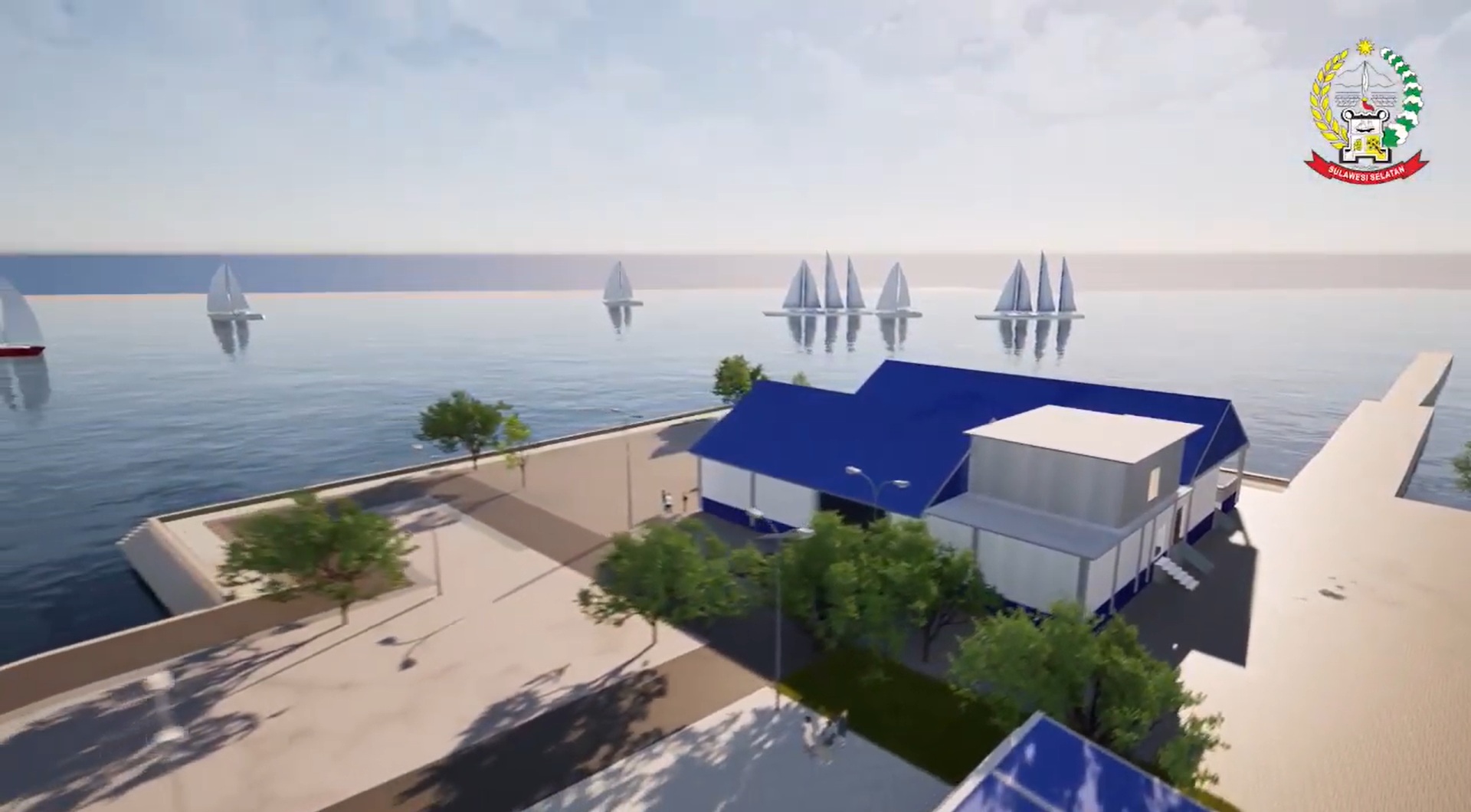
The provincial government’s revitalization of PPI Pontap represents a critical move beyond raw infrastructure, aiming instead to construct an integrated economic ecosystem designed to stabilize and empower vulnerable coastal communities.
The “Big Five” Strategy: Mapping South Sulawesi’s Maritime Strength
Data from Pelakita.ID highlights a sophisticated spatial strategy involving five high-performing PPIs that anchor the region’s maritime productivity across Fisheries Management Areas (WPP) 713, 714, and 715.
This network ensures that the provincial maritime economy is not a monolith, but a distributed system of specialized logistical hubs.
- PPI Paotere (Makassar): The strategic destination for the northern Makassar Strait.
- PPI Beba (Takalar): Managing the southern and northwestern Makassar Strait corridors.
- PPI Lappa (Sinjai): The primary gateway for WPP 714, spanning southern Bone Bay to the Selayar islands.
- PPI Lonrae (Bone): A vital nexus for the Banda Sea and Bone Bay transit within WPP 714 and 715.
- PPI Pontap (Palopo): The northern anchor and essential destination for fleets operating from the upper Bone Bay into the WPP 715 region.
Analysis:
This regional zoning is a masterstroke in supply chain resilience. By establishing specific hubs for different WPP zones, the province optimizes logistical throughput and prevents resource bottlenecks. PPI Pontap, acting as the northern gateway to WPP 715, provides a necessary maritime nexus that ensures the northern reaches of the province remain economically integrated and productive.
More Than Just a Dock: The Integrated Service Ecosystem
The modernization of PPI Pontap signals a fundamental shift in maritime philosophy: the transition from a passive landing site to an active service center.
As emphasized by Syahril Abdul Raup of the Ministry of Maritime Affairs and Fisheries (KKP), a modern PPI must prioritize the “basic needs” of the fleet—including fuel (BBM), clean water, and operational logistics—to maintain high maritime standards.
“PPI must be a center for integrated services for fishermen, not just a place for landing fish. This is where the fisheries ecosystem is built.” — Syahril Abdul Raup
Analysis:
Treating a port as a service hub is a vital upgrade that directly addresses operational overhead. By minimizing the time fishermen spend searching for fuel or water, the project reduces downtime and enhances the “supply chain fluidity” of Palopo’s exports.
This strategy, reinforced by the fiscal commitment of Muhammad Ilyas at the provincial level and the administrative support of Palopo Mayor Naili Trisal, transforms the port into a high-stakes asset for regional development.
The Multiplier Effect: Turning Fish into Jobs
The renovation, spearheaded by Muhammad Ilyas and proponent Trisal Tahir, involves comprehensive physical upgrades including modern landing facilities, streamlined office zones, and enhanced road access.
Trisal Tahir notes that these improvements are designed to trigger a “multiplier effect,” where the port serves as a catalyst for diverse entrepreneurial ventures within the coastal community.
The derivative sectors poised for growth include:
- Culinary and Retail: New market spaces for value-added seafood products and local eateries.
- Logistics and Cold Chain: Increased demand for specialized transport and processing services.
- Ancillary Services: Professionalized parking management and facility maintenance sectors.
Analysis:
This approach illustrates how physical infrastructure acts as a platform for local entrepreneurship rather than just a public works project. The synergy between provincial leadership and Mayor Naili Trisal’s municipal authority ensures that the PPI becomes an urban development tool that fosters job creation for the most economically vulnerable populations.
The Digital Anchor: Transparency Through Technology
Perhaps the most disruptive element of the PPI Pontap renovation is the shift toward a digital management system. In a sector traditionally dominated by manual tracking and informal processes, this technological anchor introduces a level of accountability that is often missing from legacy maritime operations.
- Optimizing PAD: Digital systems will streamline “retribution management,” ensuring that Original Local Revenue (PAD) is captured without the leakages common in manual systems.
- Operational Transparency: A digital framework ensures all business processes are audited and efficient, providing a stable foundation for future investment.
“In the future, we want the management of the PPI to be based on a digital system, so that all processes are more transparent, accountable, and efficient.” — Trisal Tahir
Analysis:
The “surprising” impact of digital transparency lies in its ability to dismantle decades of informal, leakage-heavy management.
By replacing keping-and-paper systems with digital accountability, the government ensures that the economic value generated by the sea is actually reinvested into the community, turning the “blue economy” from a slogan into a measurable reality.
A New Horizon for East Indonesia
The transformation of PPI Pontap provides a sophisticated blueprint for sustainable and inclusive port management across the archipelago. By integrating physical logistics with digital governance and a service-first mindset, Palopo is positioning itself as a leader in the regional maritime economy.
Final Thought:
As Indonesia looks toward a more resilient maritime future, one must ask: could the successful integration of digital transparency and physical services in a small-scale port like Pontap be the definitive model for redefining the national maritime economy?