
If they are only built temporarily, they will likely be damaged again after a few years. That is why stronger planning and investment are needed so that coastal protection can last longer.
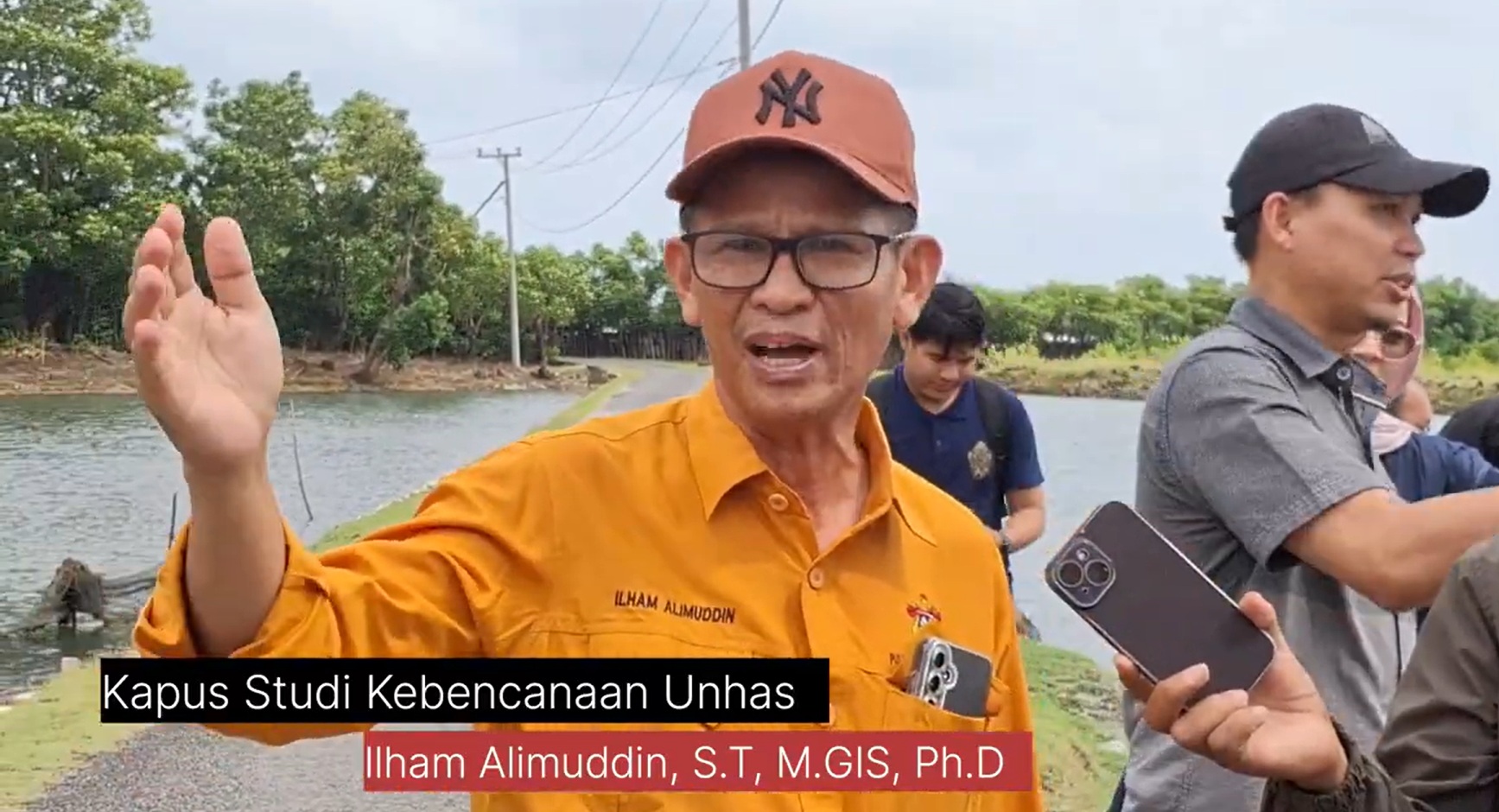
Ilham Alimuddin, Ph.D
PELAKITA.ID — Climate change is no longer merely a global issue that feels distant from everyday life. In coastal areas, its impacts can already be seen directly, one of which is coastal erosion that continues to reshape the shoreline.
This phenomenon poses a real threat to coastal communities, including seaweed farmers and aquaculture practitioners.
During a field discussion with journalists, Ilham Alimuddin, S.T., M.GIS., Ph.D, Head of the Disaster Center at Hasanuddin University, explained that coastal abrasion is one of the most visible impacts of climate change in coastal regions.
According to him, changes in the shoreline are strongly influenced by ocean dynamics or hydrodynamics, which include ocean currents, tides, wind pressure, and extreme weather conditions.
“Changes in the shoreline are largely determined by coastal hydrodynamics. Ocean currents, tides, wind pressure, and even high rainfall can intensify the process of coastal erosion,” Ilham explained.
When these factors occur simultaneously, the energy of ocean waves striking the land becomes stronger. This condition gradually erodes the coastline, particularly in vulnerable coastal areas.
In several locations, signs of abrasion can be clearly observed through simple embankments built by local communities to hold back ocean waves. However, Ilham noted that such efforts are often temporary.
“Embankments built by communities do help, but if they are only temporary, they usually collapse again after two or three years because they continue to be eroded by ocean currents,” he said.
For that reason, he emphasized that mitigation efforts by the government must consider constructing stronger and more sustainable coastal protection structures.
Mitigation and Adaptation
In managing coastal disaster risks, Ilham explained that there are two main approaches: mitigation and adaptation.
Mitigation itself can be divided into two categories: structural and non-structural mitigation. Structural mitigation includes the construction of physical infrastructure such as seawalls, coastal embankments, or breakwaters designed to protect land from the impact of ocean waves.
However, building such structures requires substantial investment to ensure long-term durability.
“If they are only built temporarily, they will likely be damaged again after a few years. That is why stronger planning and investment are needed so that coastal protection can last longer,” Ilham said.
Meanwhile, non-structural mitigation focuses on social and environmental approaches, including public education, strengthening disaster literacy, and rehabilitating coastal ecosystems.
Planting coastal vegetation such as mangroves is often mentioned as a natural solution to reduce wave energy. However, Ilham emphasized that not all coastal areas are suitable for mangrove planting.
“Each coastline has different characteristics. Some areas are suitable for mangroves, while others are not. Therefore, solutions must be tailored to the local environmental conditions,” he said.
Adaptation by Coastal Communities
Beyond mitigation, coastal communities have also developed various forms of adaptation to cope with environmental changes.
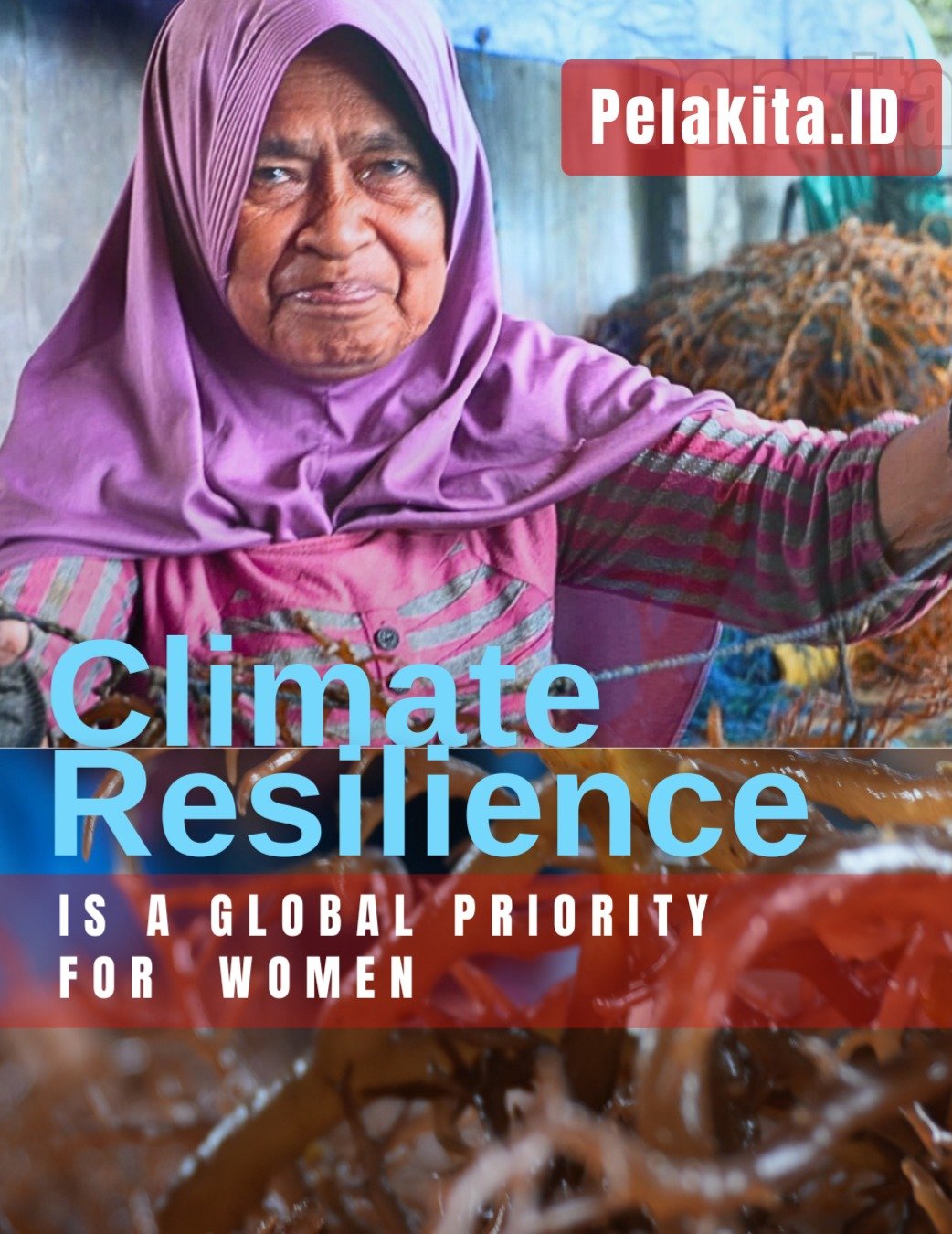
One example can be seen in seaweed farming practices. During extreme weather conditions or heavy rainfall, some farmers install additional nets or mesh on cultivation lines to prevent seaweed from detaching or being swept away by strong currents.
According to Ilham, such simple innovations represent local adaptation strategies that emerge from the communities’ own experiences.
“This is a very interesting example of adaptation. Communities learn from changing environmental conditions and then find ways to adjust,” he said.
He believes that local practices like these deserve further study by researchers and policymakers so they can be developed into broader solutions.
The Importance of Disaster Literacy
Amid growing climate threats, disaster literacy for coastal communities has become increasingly important.
With better understanding, communities can determine the necessary steps to reduce risks, whether through mitigation measures or adaptation strategies.
“What matters is not only recognizing the impacts, but also identifying solutions that can be applied according to local conditions,” Ilham said.
Through greater awareness and understanding of coastal erosion and shoreline change, it is hoped that communities, government institutions, and researchers can work together to address the challenges of climate change in Indonesia’s coastal regions.
Editorial Team