

The initiative calls for mobilizing both public and private finance to support sustainable ocean management, and to close the massive funding gap: today, less than 1% of global climate finance goes to the ocean.
PELAKITA.ID – As the world gathers in Belém for COP30, the Amazon rainforest naturally dominates global attention. Yet, quietly and powerfully, another vital ecosystem is emerging at the center of climate conversations: the ocean.
From mangrove forests to seaweed farms, from small-scale fisheries to innovative carbon technologies, COP30’s side-events reveal a growing recognition that the path to a stable climate runs through healthy seas.
Below are some of the most important thematic discussions at COP30 that focus specifically on ocean solutions—and why they matter for our shared future.
1. Seaweed & Aquatic Foods: Blue Solutions for Climate Resilience
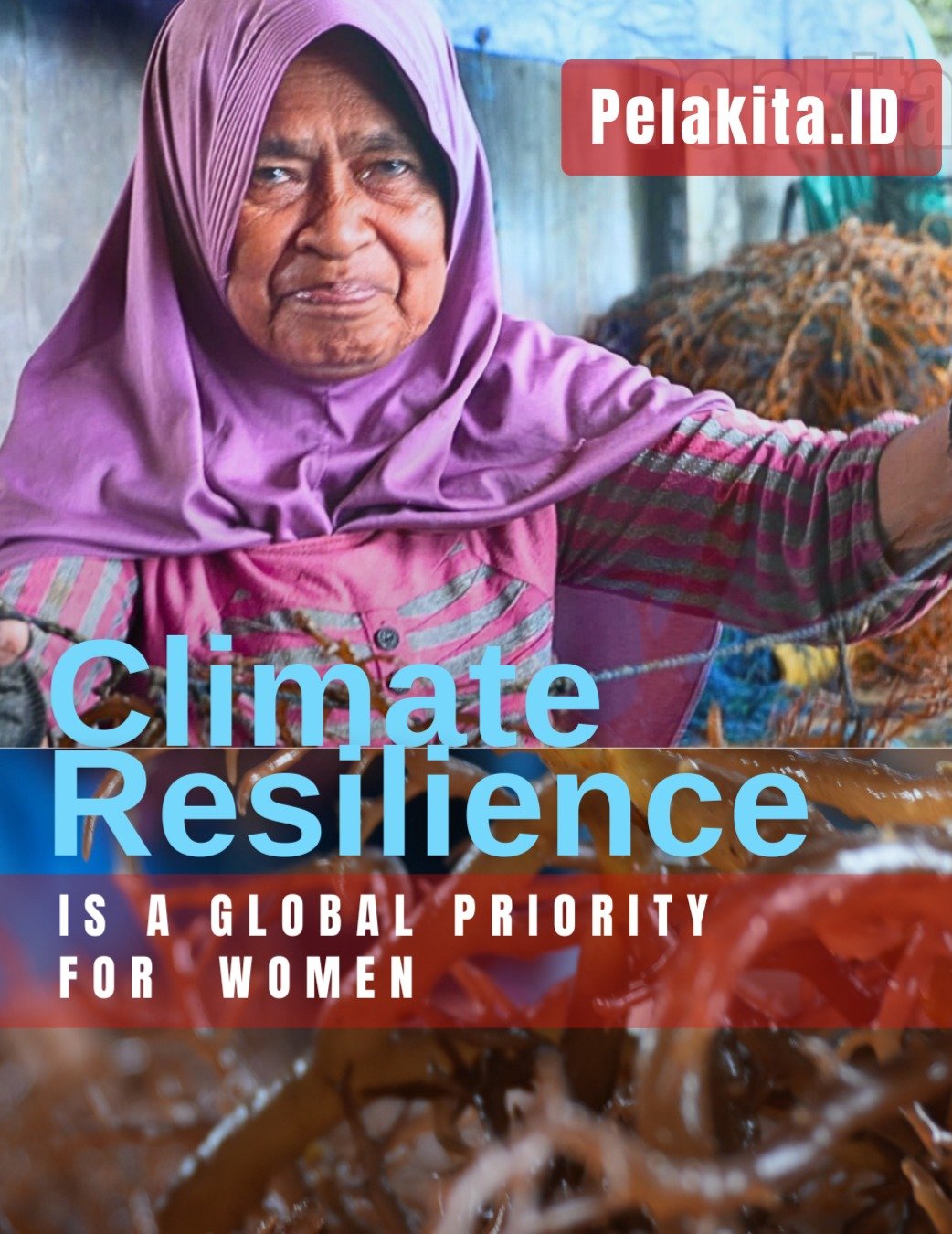
Organized by UNCTAD, FAO, and the UN Global Seaweed Initiative, this side-event explores how the world’s fastest-growing aquatic crops—especially seaweed—can support climate resilience.
Discussions highlight how aquatic food systems can strengthen food security, create sustainable livelihoods, and reduce pressure on land-based agriculture.
This matters because global food systems are heavily land-dependent and increasingly vulnerable to climate stress; expanding the “blue food economy” diversifies resources and builds resilience.
The event also emphasizes new horizons: seaweed for cosmetics, biomaterials, pharmaceuticals, and biofuels, showing how algae cultivation can scale across the blue economy and create low-carbon industries.
Importantly, this theme links directly to COP30’s Action Agenda, encouraging countries to integrate marine food systems into national climate plans (NDCs) and adaptation strategies—something that has been missing in many global climate frameworks.
2. Cooperation for Small-Scale Fisheries and Seaweed Aquaculture
The Aquatic Blue Food Coalition features a session dedicated to strengthening small-scale fisheries and expanding sustainable seaweed production.
Here, the focus shifts to people and communities: the fishers, coastal households, and indigenous groups whose livelihoods depend on healthy seas.
This event explores how climate mitigation and adaptation can be achieved through community-led aquatic food systems, supported by better finance, technology transfer, and policy cooperation.
This theme is crucial because over 3 billion people depend on marine biodiversity for their livelihoods. Strengthening small-scale fisheries is not only about conservation—it is also a core strategy for poverty reduction and climate justice.
3. Mangroves at the Edge: Bridging Forests and Oceans
Hosted by CIFOR-ICRAF, this session reminds the world that mangroves sit at the literal and symbolic border between land and sea.
Mangroves provide:
-
massive carbon storage (up to 4x more than tropical forests),
-
coastal protection from storms and erosion,
-
and critical habitats for fisheries and biodiversity.
This session emphasizes that losing mangroves means losing one of the planet’s most effective natural defenses against climate change and coastal disasters.
Discussions examine how countries can embed mangrove conservation in national climate plans, biodiversity frameworks, and economic development strategies while ensuring sustainable financing and strong governance.
4. Next-Generation Blue Carbon: Digital MRV & Carbon Markets
Another CIFOR-ICRAF session dives into the technical frontier of ocean climate solutions.
This event introduces cutting-edge approaches to measure and verify mangrove carbon stocks using AI, drones, and satellite-based MRV systems.
Accurate MRV is essential for scaling blue carbon markets because it ensures transparency, prevents carbon fraud, and builds confidence among investors.
The goal: enable mangrove-based carbon credits to enter high-integrity carbon markets, unlocking new financing for conservation and restoration—without compromising environmental or social safeguards.
For many coastal nations seeking to meet climate targets while creating economic opportunities, this is a breakthrough opportunity.
5. The Ocean Pavilion: Science, Finance, and Marine Innovation
The Carbon to Sea Initiative leads a suite of events at the Ocean Pavilion in the Blue Zone, addressing broad themes such as:
Ocean Life & Biodiversity
Focuses on the protection and restoration of marine species and ecosystems—coral reefs, mangroves, seagrass, fisheries, and deep-sea habitats. Discussions highlight how healthy biodiversity supports climate regulation, food security, and coastal livelihoods.
Blue Economy & Finance
Explores sustainable economic activities related to the ocean—such as fisheries, tourism, renewable energy, and seaweed industries—while connecting them to climate finance. The aim is to mobilize investments that grow the economy without harming marine ecosystems.
Ocean Justice & Equity
Addresses fairness and rights within ocean governance. This includes ensuring that coastal communities, indigenous peoples, and small-scale fishers have access to resources, funding, participation in decision-making, and protection against climate-driven losses.
Forest-to-Sea Connections
Emphasizes how land systems (forests, rivers, watersheds) directly affect marine health. Deforestation, pollution, and land degradation flow downstream, impacting estuaries, coral reefs, and fisheries. Climate solutions must therefore integrate both terrestrial and marine ecosystems.
Here, science meets diplomacy. The pavilion highlights the importance of advanced marine observing systems to monitor sea-level rise, warming, acidification, and deoxygenation—threats that define the future of coastal cities and island nations.
It also explores ocean-based carbon removal (mCDR), a rapidly growing research field investigating whether the ocean can safely absorb more carbon without harming ecosystems. These conversations are shaping the scientific and ethical boundaries of future climate technologies.
6. ORRAA: Growing the Blue Finance Movement
The Ocean Risk & Resilience Action Alliance (ORRAA) brings a powerful message to COP30: the ocean is living capital, and investing in its health is essential for climate resilience.
ORRAA unveils its “Blue Package”—a roadmap of priority actions from 2025–2028 designed to scale ocean-climate solutions, especially for vulnerable coastal communities. This includes insurance innovations, resilience bonds, and targeted support for nature-based solutions.
The initiative calls for mobilizing both public and private finance to support sustainable ocean management, and to close the massive funding gap: today, less than 1% of global climate finance goes to the ocean.
Why These Side-Events Matter
The presence of these ocean-focused sessions at COP30 signals a major shift: the ocean is no longer an afterthought in climate policy.
These discussions matter because they:
1. Center ocean solutions in global climate action.
From seaweed aquaculture to mangrove conservation, the events show how the ocean can drive both mitigation and adaptation at scale.
2. Connect science, policy, and finance.
They bring together researchers, governments, entrepreneurs, and community leaders to translate knowledge into action.
3. Elevate coastal and indigenous communities.
Small-scale fishers and local seaweed farmers are not just stakeholders—they are climate leaders whose wisdom and stewardship are essential.
4. Mobilize new funding for ocean action.
With blue carbon, climate funds, and impact investment gaining momentum, the ocean is finally attracting the finance it needs.
A Blue Wave at COP30
Oceans are often described as Earth’s “lungs,” “climate regulators,” and “carbon sinks.” But at COP30, they are something even more powerful: a source of solutions and hope.
By spotlighting the sea in its many forms—from mangroves and seaweed to fisheries and scientific innovation—COP30 is helping build a future where climate action is not only green, but boldly blue.