

Residents lost their livestock, fields were drowned, and roads disappeared under the waves. Yet for the people of Galesong, this was not the end of the story. They returned to the shore to rebuild what was swept away, to begin again.
Part 1 — Introduction: The Tide and the People of Galesong
Residents lost their livestock, fields were drowned, and roads disappeared under the waves. Yet for the people of Galesong, this was not the end of the story. They returned to the shore to rebuild what was swept away, to begin again.
In this village—where the land and sea exchange roles so easily—stories of resilience are part of daily life. Galesong is not merely a place on the map of South Sulawesi; it is a metaphor for the rhythm of human endurance. The name Galesong itself, derived from the Makassarese words galesa (tide) and songi (sound or hum), evokes the murmur of waves that never cease to touch the shore, whispering persistence rather than surrender.
From generation to generation, this stretch of coast has faced erosion, storms, and the push of modernization. And yet, Galesong has never allowed itself to be erased. Its people, who live between the pull of the sea and the promise of the land, have always found a way to adapt—creating livelihoods, building solidarity, and preserving their sense of place in the world.
Part 2 — Sociology of Galesong: A Hasty Modernization
Modernization arrived in Galesong like an impatient guest—too hurried to understand, too confident to listen. Concrete roads, electricity poles, and mobile phone signals appeared long before the local people had the chance to redefine their own idea of progress. In the name of development, the rhythm of daily life changed abruptly. F
ishermen who once read the stars to predict the tide now rely on weather apps; their children no longer mend nets at dusk but scroll through the endless blue light of social media.
For many, this transformation came not as a choice but as a current too strong to resist. Modernization here is not an evolution, but a wave that swept through before the people could even learn to swim in it.
It promised prosperity, yet often left behind confusion—a kind of social vertigo where old values fade faster than new skills emerge.
Still, Galesong is not without reflection. Amid the noise of engines and the glow of screens, there are elders who quietly remind their grandchildren: “Never forget where the tide returns.” These words carry more than nostalgia; they are a moral compass in a world changing too quickly.
In this sense, the sociology of Galesong is a story of negotiation between memory and modernity—between the wisdom of the past and the seductions of the present. The people live at the edge of two forces: the sea that sustains them and the modern world that constantly demands adaptation. To live here is to learn balance, to modernize without losing one’s soul.
Part 3 — The Sea as Social and Spiritual Space
For the people of Galesong, the sea is not merely a livelihood—it is a way of being, a teacher, and at times, a test of faith. Every ripple carries meaning; every gust of wind, a sign. To set sail is to pray, to cast a net is to hope, and to return home safely is to give thanks.
Long before development plans and modern mapping, the people already understood the sea’s temperament through intuition and inherited wisdom.
The sea was read through the color of its surface, the movement of clouds, and the behavior of fish. Such knowledge is not written in books but memorized in the body—in the muscles of the fishermen, in the patience of women waiting at dusk, in the laughter of children who grow up chasing tides rather than screens.
But beyond the practical, the sea also holds the sacred. Fishermen still pour offerings of rice or flowers before their first voyage of the season—not as superstition, but as an act of humility toward nature.
The relationship between humans and the sea is one of dialogue, not domination. To offend the sea is to invite imbalance; to honor it is to maintain harmony between life and livelihood.
This spiritual ecology is now under pressure. The arrival of trawlers, sand mining, and industrial waste has disrupted not only the ecosystem but also the moral order. The sea, once a shared space of meaning, risks becoming merely a field of extraction. And yet, many in Galesong still resist such reduction. They speak of the sea as bapa—a father who provides, but also demands respect.
In their prayers, the sea is not conquered—it is befriended. That is the secret of endurance passed down across generations: to live with the sea, not against it.
Part 4 — Social Ecology: Between Tradition and Development
The social fabric of Galesong is woven from countless acts of cooperation: building boats together, sharing catches, helping a neighbor repair a house after a storm. These gestures of siri’ na pacce—honor and compassion—form the moral foundation of life by the sea. It is this ethic of togetherness that has long allowed Galesong to endure hardship without losing its humanity.
But modern development, with its fixation on efficiency and capital, often fails to recognize this invisible strength. Projects arrive with targets, budgets, and deadlines, yet seldom with an understanding of local rhythm. The result is an ecological dissonance: fishponds replace mangroves, concrete replaces coral, and community bonds slowly erode under the weight of market logic.
In the past, every piece of land and sea had a story, a boundary shaped by both nature and custom. Today, those boundaries are redrawn by investors and administrators who see territory not as heritage, but as property.
The punggawa—traditional leaders once entrusted with moral responsibility—are gradually replaced by brokers of permits and politics. What was once communal now risks becoming transactional.
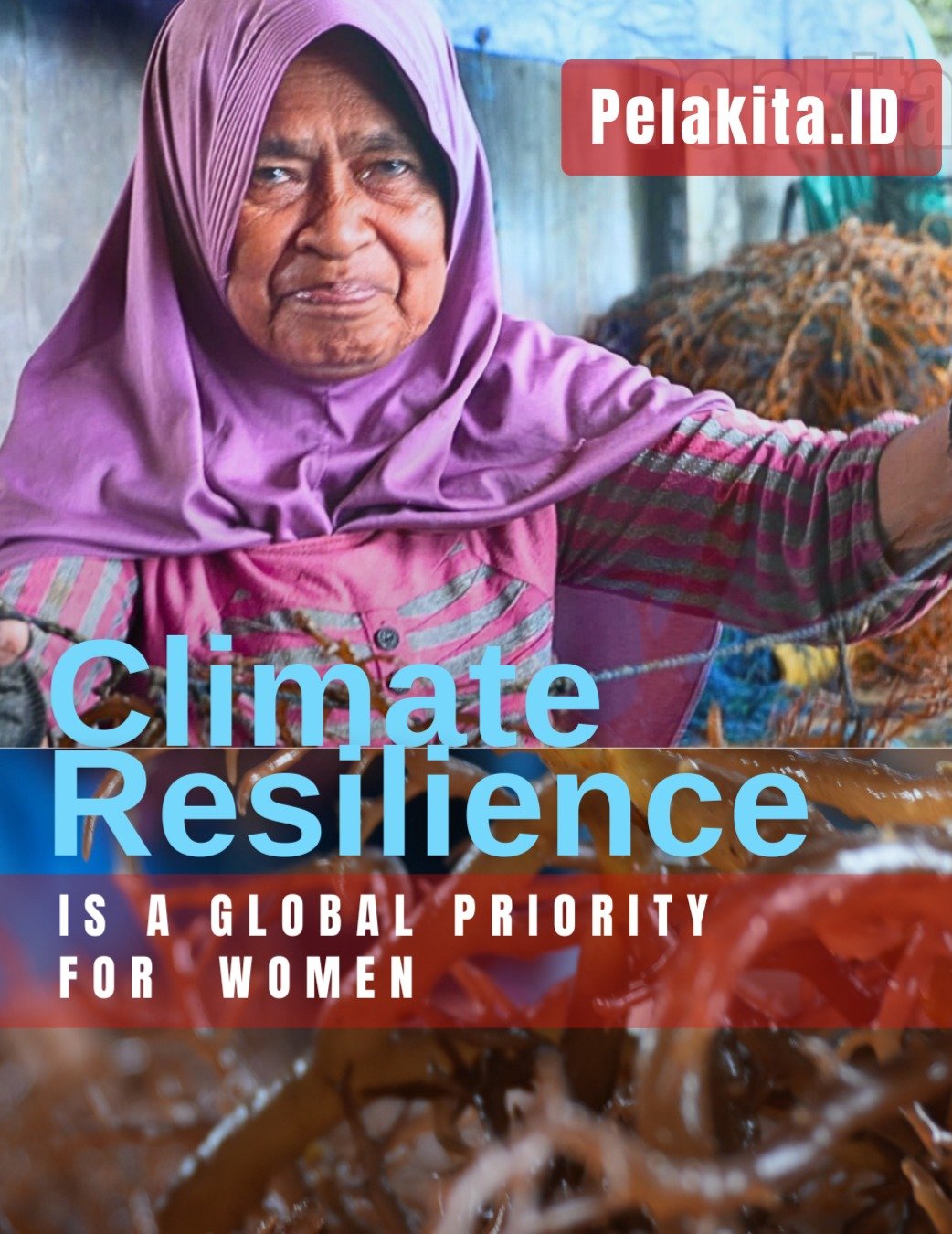
Still, tradition does not stand still. Galesong’s people continue to adapt, negotiating modernity in their own terms. Some young fishers combine local methods with digital tools, mapping their fishing zones using GPS while maintaining ancestral rules about breeding grounds. Women’s groups organize collective seaweed farming, blending local knowledge with modern management. These small acts of innovation show that sustainability is possible when tradition becomes dialogue, not obstacle.
The social ecology of Galesong thus reveals an essential truth: development without empathy leads to imbalance. The future of coastal life will not be determined by technology alone, but by whether humanity can still listen—to the tides, to one another, and to the quiet wisdom of the shore.
Part 5 — The Lost Modernization: When the Sea Is Abandoned
Modernization, when stripped of its soul, becomes nothing more than a race for symbols—bigger buildings, wider roads, louder slogans about progress. In Galesong, this rush has left behind a quiet sorrow: the slow forgetting of the sea.
Many of the younger generation now look to the city for a better life, leaving behind boats that once carried their fathers through storms. The call of office jobs and factory lights drowns out the rhythm of waves that once defined their sense of time. “There’s no future at sea,” they say—words that wound the memory of a coast built by salt, wind, and patience.
The irony is sharp: while the state promotes “blue economy” policies, the blue horizon itself fades from the dreams of its people. The modernization that should have empowered coastal communities instead often drives them inland—alienated from both the land and the sea. Fishers become construction workers; boat builders turn into ojek drivers.
The skills that once sustained generations vanish in the name of progress that seldom reaches their doors.
Yet amid this loss, some still hold fast. There are teachers who weave lessons about the ocean into schoolbooks; young activists who document local wisdom before it disappears; and elders who, in the dim light of evening, still tell stories of perahu padewakang, the great sailing boats that once crossed the archipelago with pride.
Their persistence is a form of resistance—a refusal to accept modernization as erasure. For them, the sea is not an obsolete past but a living memory that continues to shape identity. To abandon the sea is to abandon oneself.
Modernization in Galesong, then, must find its way home. It must rediscover the rhythm of the tide, where progress means harmony, not conquest.
The future of this coast will depend on whether development can once again listen—to the sound of paddles cutting through water, to the voices of those who still remember how to live by the sea.
Part 6 — Between Memory and Hope: Rewriting Galesong
To write about Galesong is to sail across layers of memory—some calm, some turbulent. Every wave carries a story; every footprint on the sand belongs to someone who once believed the sea would always provide. Yet, between memory and hope, Galesong continues to search for its voice: not as a relic of the past, but as a living community capable of reimagining its own destiny.
The elders speak of siri’, dignity, as the anchor that keeps them steady when the world changes too quickly. For them, the meaning of progress is not measured by wealth or buildings, but by the ability to stand together when the tide turns against you.
That moral compass—rooted in empathy and shared responsibility—is what modernization must learn from Galesong if it wishes to be humane.
The future of this coast will depend not on how fast it modernizes, but on how deeply it remembers. To preserve the sea is to preserve life; to respect the land is to respect those who came before. Galesong’s hope lies in this balance—between science and wisdom, between technology and tradition, between what can be built and what must be protected.
Perhaps the truest modernization begins here: in rediscovering the meaning of belonging, of walking barefoot on the shore that raised us, and realizing that progress without roots is merely motion without direction.
Galesong is not just a place. It is a reminder that every tide that recedes will one day return—and with it, the chance to begin anew.
___
Written by Kamaruddin Azis (Founder Pelakita.ID)