
PELAKITA.ID – In the mid-19th century, as the Dutch colonial presence in the Indonesian archipelago became more established, European scholars, administrators, missionaries, and collectors began systematically assembling records of the people, languages, cultures, and landscapes they encountered.
Over decades, these collections grew into one of the most important archives of Southeast Asian history: the collections of the Royal Netherlands Institute of Southeast Asian and Caribbean Studies (KITLV), now stewarded by Leiden University Libraries in the Netherlands. DutchCulture+1
Manuscripts: Echoes of Local Voices
Among the riches preserved in Leiden are manuscripts written in indigenous languages of Sulawesi, including Bugis and Makassarese. These texts range from traditional literature to chronicles and historical records that were copied or collected in the 19th century.
One of the most remarkable is the La Galigo manuscript — a fragment of the world’s longest epic, written in the Buginese language.
This manuscript was transcribed in Makassar around 1852–1858, at the behest of Colliq Pujie, a Queen Mother of Tanete, and represents a deep indigenous narrative tradition stretching back generations.
The Leiden manuscript (catalogued as NBG-Boeg 188) has been recognised on UNESCO’s Memory of the World Register, underlining its global cultural significance. Universiteit Leiden+1
Beyond La Galigo, the broader manuscript holdings include Lontara family and historical texts, legal-administrative documents, and various Bugis–Makassar works preserved through missions or local scribes.
These materials — some dating from the early to mid-19th century — provide rare perspectives on local political orders, social customs, and the written traditions of South Sulawesi. Leiden University Libraries
Photographs: Faces and Places of a Bygone Era
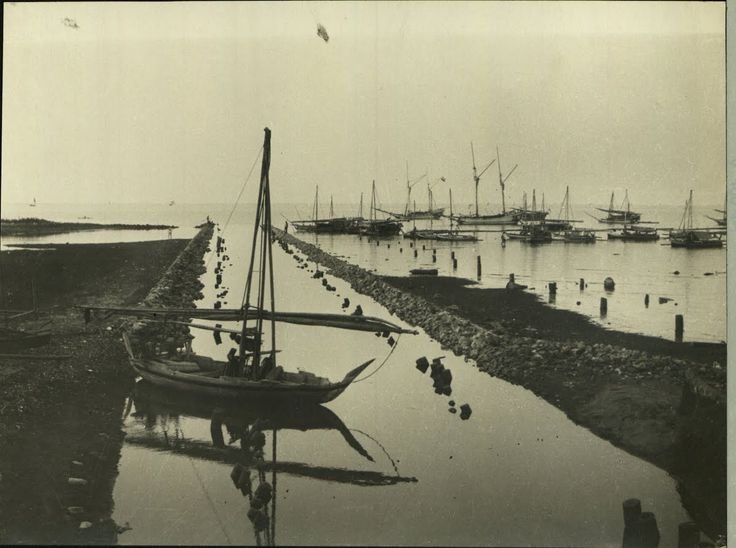
Starting in the late 19th century, KITLV began collecting photographs and prints documenting the Dutch East Indies. Although these collections span the wider archipelago, many images capture scenes of everyday life, landscapes, and infrastructure from the colonial period circa 1860–1940. Delpher
These photographs, originally taken by both professional studios and amateur photographers, include:
-
Townscapes and harbor views from port cities like Makassar — places that were hubs of trade and cultural mixing in South Sulawesi.
-
Portraits of local individuals and families, sometimes included in albums kept by European residents or travellers.
-
Buildings, forts, and daily life scenes that preserve visual memories of societies transitioning under colonial influence.
While not every image is precisely dated or labelled with every locality, the sheer breadth of these collections (tens of thousands of photos) makes them invaluable for reconstructing visual histories of places like Galesong or Gowa within the colonial era context. Delpher
Maps, Prints, and Other Records
In addition to manuscripts and photos, the KITLV/Leiden archives include maps and printed materials from the 19th and early 20th centuries that situate South Sulawesi within the colonial spatial and administrative orders. These maps often trace roads, ports, and territorial divisions — material evidence of how Dutch officials understood and documented the region. Leiden University Libraries
The Wider Archival Landscape
Although the KITLV/Leiden collections are among the richest, they are part of a broader archival context. Other institutions — such as the British Library — also hold historical Bugis and Makasar manuscripts that reflect related documentary traditions from the 19th century, including legal, diplomatic, and literary texts acquired during earlier colonial episodes. Scroll.in
Why These Materials Matter
These manuscripts and photographs are not merely antiquarian curiosities — they are living windows into South Sulawesi’s past. They allow historians, linguists, and cultural scholars to hear indigenous voices, see places long transformed, and trace how societies in Gowa, Makassar, and beyond navigated an era of intense change.
Today, many of these items are digitized and accessible online through Leiden’s digital collections, meaning researchers and the public worldwide can explore them without needing to travel. Leiden University Libraries