
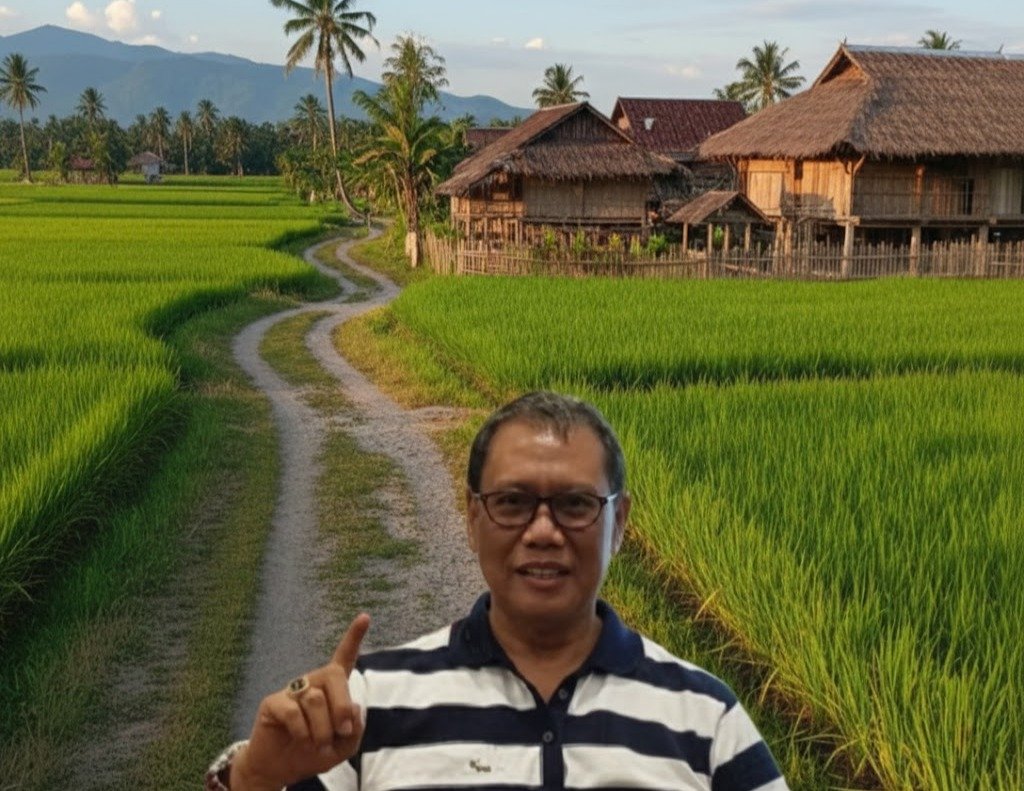
PELAKITA.ID – Prof. Dr. H. Hamka Naping, M.A. is a senior Indonesian academic and one of the most respected anthropologists at Universitas Hasanuddin (Unhas), Makassar.
He serves as a Professor of Anthropology in the Department of Anthropology, Faculty of Social and Political Sciences (FISIP) and is also actively involved in the Graduate School of Universitas Hasanuddin.
With decades of experience in teaching, research, and academic leadership, Prof. Hamka Naping has made significant contributions to the development of anthropology in Indonesia, particularly in the eastern regions of the country.
Academic Background and Career
Born in Barru, South Sulawesi, on 4 November 1961, Prof. Hamka Naping completed all his higher education in anthropology at leading Indonesian universities.
He earned his undergraduate degree from Universitas Hasanuddin, his master’s degree from the University of Indonesia, and later completed his doctoral studies at Universitas Hasanuddin. In 2006, he was officially appointed as a full professor (Guru Besar) in Anthropology.
Throughout his career at Unhas, he has held numerous strategic academic and administrative positions. These include serving as Head of the Anthropology Department, Dean of FISIP, member of the Faculty and University Senate, and Assistant Director (or Vice Dean) for Planning, Finance, and Resources at the Graduate School.
His leadership roles reflect both his academic credibility and institutional trust.
Fields of Specialization
Prof. Hamka Naping’s expertise lies primarily in Anthropology, with particular emphasis on:
-
Maritime Anthropology, focusing on the social and cultural life of coastal and fishing communities
-
Ecological Anthropology and Human Ecology, examining the relationship between human societies and their natural environments
-
Cultural Anthropology, including local knowledge systems, social organization, and cultural change
His work frequently explores how traditional communities—especially in coastal and maritime settings—adapt to environmental, economic, and policy changes. These themes are highly relevant in Indonesia, a nation with vast coastlines and strong maritime traditions.
Research, Teaching, and Academic Contributions
As a scholar, Prof. Hamka Naping has been deeply involved in ethnographic research, policy-related social studies, and interdisciplinary approaches linking culture, environment, and development.
He has supervised numerous undergraduate theses, master’s theses, and doctoral dissertations, many of which focus on coastal societies, local cultures, and social transformation.
He is also an active member of professional organizations such as the Indonesian Anthropological Association (AAI) and has frequently contributed as an expert in cultural heritage, social assessment, and community-based development initiatives at regional and national levels.
Prof. Hamka Naping’s scholarly work reflects a sustained commitment to ethnographic inquiry and the study of culture, community, and social adaptation in Indonesia. One of his notable contributions is the article “Nelayan Danau Tempe: Community Adaptation Strategies to Seasonal Change,” published in ETNOSIA: Jurnal Etnografi Indonesia in June 2019.
Co-authored with Icha Musywirah Hamka, this study examines fishing communities around Lake Tempe in South Sulawesi, focusing on how seasonal changes shape economic strategies, social organization, and cultural practices. Through an ethnographic approach, the research highlights the resilience and adaptive capacities of local fishermen in responding to ecological uncertainty.
His engagement with local culture and governance is further evident in the article “Local Values of Buginese Culture in the Practice of Government Organizations in Sinjai,” published in ETNOSIA in June 2020.
Co-written with Andi Lukman Irwan and colleagues, this study explores how Bugis cultural values are internalized within government organizations and how these values influence public service delivery in Sinjai Regency. The article contributes to broader discussions on culturally grounded governance and the role of local wisdom in public administration.
In the field of religious and social anthropology, Prof. Hamka Naping co-authored “Jamaah Tabligh: An Ethnographic Study of Hierarchy and Islamic Preaching at Masjid Jami Kerung-Kerung, Makassar,” published in 2023 in the Jurnal Interdisipliner Sosiologi Agama (JINNSA).
Together with Muhammad Rais, he investigates the social structure, hierarchical organization, and preaching practices of the Jamaah Tabligh movement within a major mosque community in Makassar.
The study offers an in-depth ethnographic perspective on contemporary Islamic movements and their modes of social engagement.
His interest in cultural heritage and its contemporary relevance is reflected in the article “The Existence of Otanaha Fort in Gorontalo as a Cultural Heritage and Tourist Attraction,” published in ETNOREFLIKA: Jurnal Sosial dan Budaya in 2025. Co-authored with Melissa Wala and Tasrifin Tahara, the study analyzes Otanaha Fort as both a historical site and a potential driver of cultural tourism, emphasizing the importance of heritage preservation within local development strategies.
Beyond these specific publications, Prof. Hamka Naping has also contributed to interdisciplinary research on environmental and social issues. Among them is a phenomenological study on community experiences of water scarcity and flooding in Indonesia, which explores how local populations perceive and cope with environmental stress.
His broader body of work, including studies on community empowerment and fishing societies, is indexed in the national Garuda research database, with publications appearing in journals such as Phinisi Integration Review, Journal La Sociale, Walasuji, ETNOREFLIKA, and JINNSA.
Collectively, these works underscore his role as a key figure in Indonesian anthropology, particularly in linking culture, environment, religion, and development through ethnographic scholarship.
Role in Institutional and National Discourse
Beyond teaching and research, Prof. Hamka Naping plays an important role in broader academic governance. He has been involved in key university processes, including serving in committees related to the selection of the Rector of Universitas Hasanuddin, where he represented perspectives from the humanities and social sciences.
His presence in these forums underscores his commitment to strengthening the role of social sciences, cultural understanding, and human-centered approaches within higher education policy and institutional development.
Conclusion
Prof. Hamka Naping stands out as a prominent Indonesian anthropologist whose work bridges culture, environment, and development, particularly within maritime and coastal contexts.
Through his scholarship, leadership, and mentorship, he has helped shape generations of anthropologists and contributed meaningfully to the understanding of Indonesia’s diverse social landscapes.
___
Witten by K. Azis