
On the farms, biologists closely monitor shrimp health, as stress caused by temperature and salinity changes is a leading trigger of disease. A new generation of shrimp farmers has begun to embrace more sustainable practices, moving away from antibiotics and toward organic acids, essential oils, and natural soil recovery methods.
“Hay que decirle al mundo cómo se produce este camarón.”
PELAKITA.ID – The message is clear: the world must be told how Ecuadorian shrimp are produced, and consumers must demand transparency about where their shrimp comes from and under what conditions it is farmed.
Today, Ecuador stands as one of the world’s leading shrimp producers.
The industry generates billions of dollars annually and has become the country’s second-largest source of income after oil for a nation of just 14 million people. At the heart of this industry lies Guayaquil, Ecuador’s largest port and the central hub of shrimp processing and export.
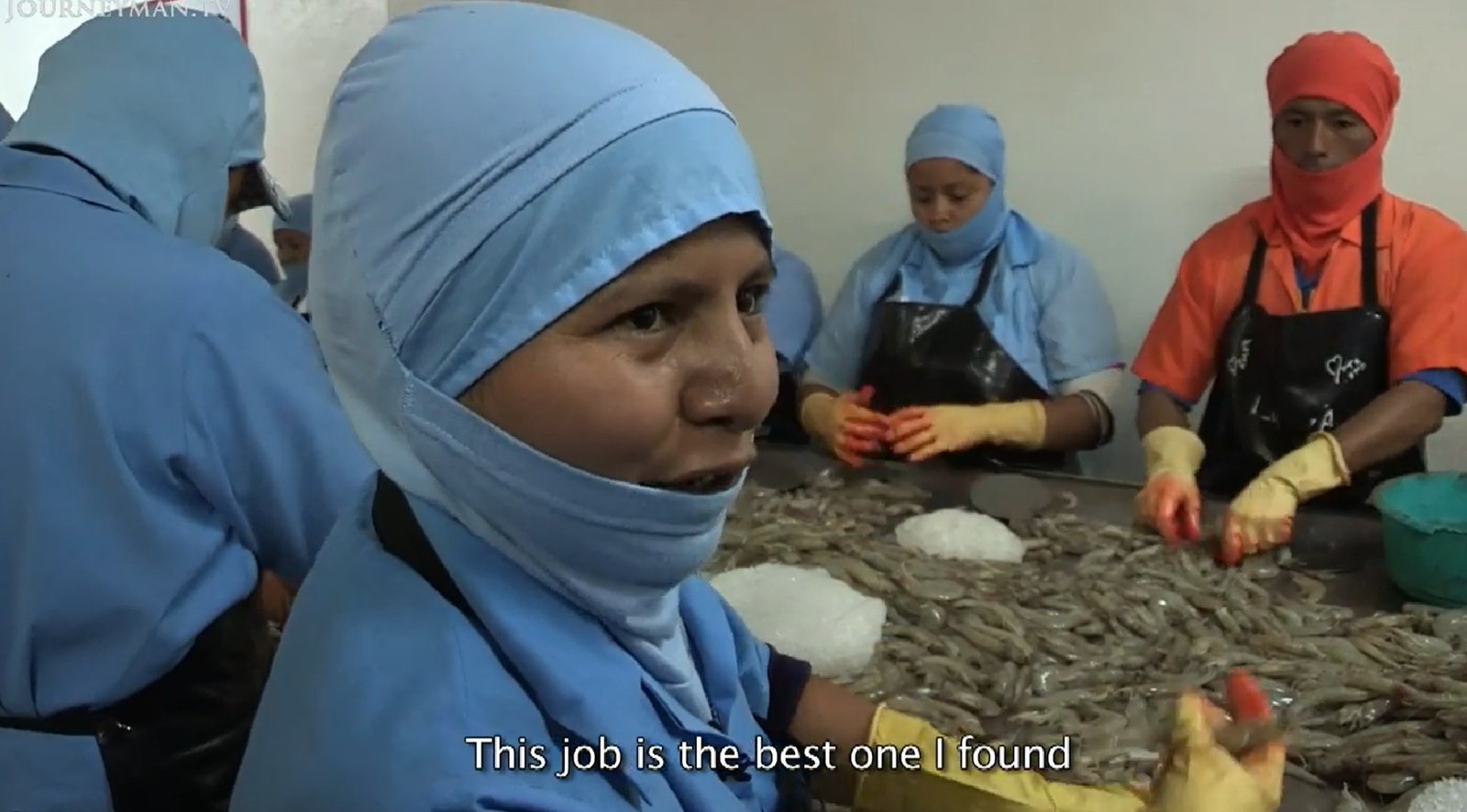
Inside one of the country’s largest shrimp processing plants, more than 60 tons of shrimp are peeled, sorted, frozen, and packaged every single day.
Much of this production is destined for Europe, particularly France. While whole shrimp are preferred by the French market, peeled shrimp also make up a significant export product. Around 120 workers operate in a single shift to meet the plant’s freezing capacity. Nothing goes to waste—shrimp heads removed during processing are reused to produce feed, which is later blended into balanced feed for shrimp or fish farming.
For many workers, employment in shrimp processing plants represents a rare opportunity for economic stability. Migrants from rural provinces such as Santa Elena come to the city seeking livelihoods unavailable in their home regions.
Workers are paid by output—about ten cents per kilo of peeled shrimp. In a good month, earnings can reach up to USD 350, a significant income in a country where nearly 30 percent of the population survives on less than USD 50 per month.
Still, job insecurity remains high, as production slowdowns can force workers to seek employment elsewhere or put long-term dreams—such as attending university or starting a small business—on hold.
Two hours south of Guayaquil, near the Pacific coast, lies the largest concentration of shrimp farms in Ecuador. The industry employs an estimated 250,000 people nationwide.
On the farms, biologists closely monitor shrimp health, as stress caused by temperature and salinity changes is a leading trigger of disease. A new generation of shrimp farmers has begun to embrace more sustainable practices, moving away from antibiotics and toward organic acids, essential oils, and natural soil recovery methods.
Despite these improvements, serious environmental challenges persist. Mangroves—fragile ecosystems protected in many countries—have been heavily destroyed in Ecuador due to the expansion of shrimp farming.
Official data show that mangrove coverage has declined from approximately 362,000 hectares to just 108,000 hectares, a loss of nearly 70 percent nationwide. This destruction has created severe ecological imbalance and threatens the coastal communities that depend on mangroves for their survival.
For decades, families living along estuaries relied on mangroves to harvest crabs, shellfish, and shrimp using traditional methods passed down through generations. Today, many of these livelihoods have disappeared.
Shrimp farms have taken over estuaries, often concealed within remaining mangrove forests, cutting off access for local communities. One hectare of mangrove can support up to 20 families of shellfish gatherers, while hundreds of hectares of shrimp ponds may provide work for only a handful of families.
As mangroves disappeared, entire communities were forced to migrate to cities. Social conflict escalated as private security guards restricted access to areas traditionally used for fishing and gathering.
In some cases, confrontations turned deadly. Estuaries have become zones of tension and violence, with reports of armed groups, theft, retaliation, and organized raids on shrimp farms. Shrimp stolen from farms supplies a parallel black market, while fishermen and farm owners alike live in fear.
Amid this conflict, voices calling for balance and reconciliation remain. Environmental activists argue that it is still possible to align the interests of shrimp farmers and fishing communities.
Some farm owners have begun returning ponds to mangrove restoration efforts, complying with reforestation laws. The vision is simple yet profound: shared responsibility, mutual respect, and ecological harmony.
“Tú me das una semilla de mangle, yo te doy un manglar. Tú me das conciencia, yo no contamino.”
Give a mangrove seed, receive a forest. Give awareness, receive clean waters.
The future of Ecuador’s shrimp industry depends not only on global demand—which continues to rise, particularly in Europe, China, and India—but also on whether growth can include environmental protection and social justice.
Without strong public policy enforcement and genuine dialogue, mangroves and the communities that depend on them risk being left behind by the very industry that fuels the nation’s economy.
Sources