
Selective breeding for resistance to diseases such as EHP and EMS has already shown promising results, particularly in strains resistant to White Spot Syndrome Virus (WSSV). Continued progress in this area will be vital for long-term industry resilience.
PELAKITA.ID – Ecuador is one of the original natural habitats of South American white shrimp and has emerged as the world’s largest producer and exporter of Pacific white shrimp (Litopenaeus vannamei).
In 2022 alone, Ecuador exported more than one million tons of Pacific white shrimp to global markets.
Renowned for its superior taste, rich nutritional value, and high food safety standards, Ecuadorian shrimp has become a preferred product in major importing countries.
These advantages are closely linked to Ecuador’s favorable natural farming conditions. Shrimp are cultivated year-round in waters with stable temperatures ranging from 24°C to 30°C. In addition,
Ecuador’s production model relies on relatively low stocking densities—approximately 20 shrimp per square meter—which significantly reduces stress during cultivation. As a result, survival rates typically reach 60–70 percent, well above global averages for intensive shrimp farming systems.
Despite these inherent strengths, Ecuador’s Pacific white shrimp industry faces mounting challenges. One of the most pressing issues is the sharp rise in feed costs.
During the first half of 2023, the cancellation of Peruvian anchovy fishing led to a global fishmeal supply reduction of nearly 10 percent, triggering significant increases in fishmeal and fish oil prices.
At the same time, global conflicts and prolonged droughts drove up the cost of plant-based protein ingredients such as soybean meal and wheat, which account for 20–25 percent of shrimp feed formulations. Combined, these factors resulted in a 10–15 percent increase in overall shrimp farming costs.
Market conditions have also become increasingly unfavorable. The global economic slowdown and declining demand in major shrimp-importing regions—including China, the United States, and Europe—have caused shrimp prices to fall sharply.
Furthermore, an expected 2 percent increase in global shrimp production has intensified oversupply, pushing farm-gate prices dangerously close to break-even levels for producers.
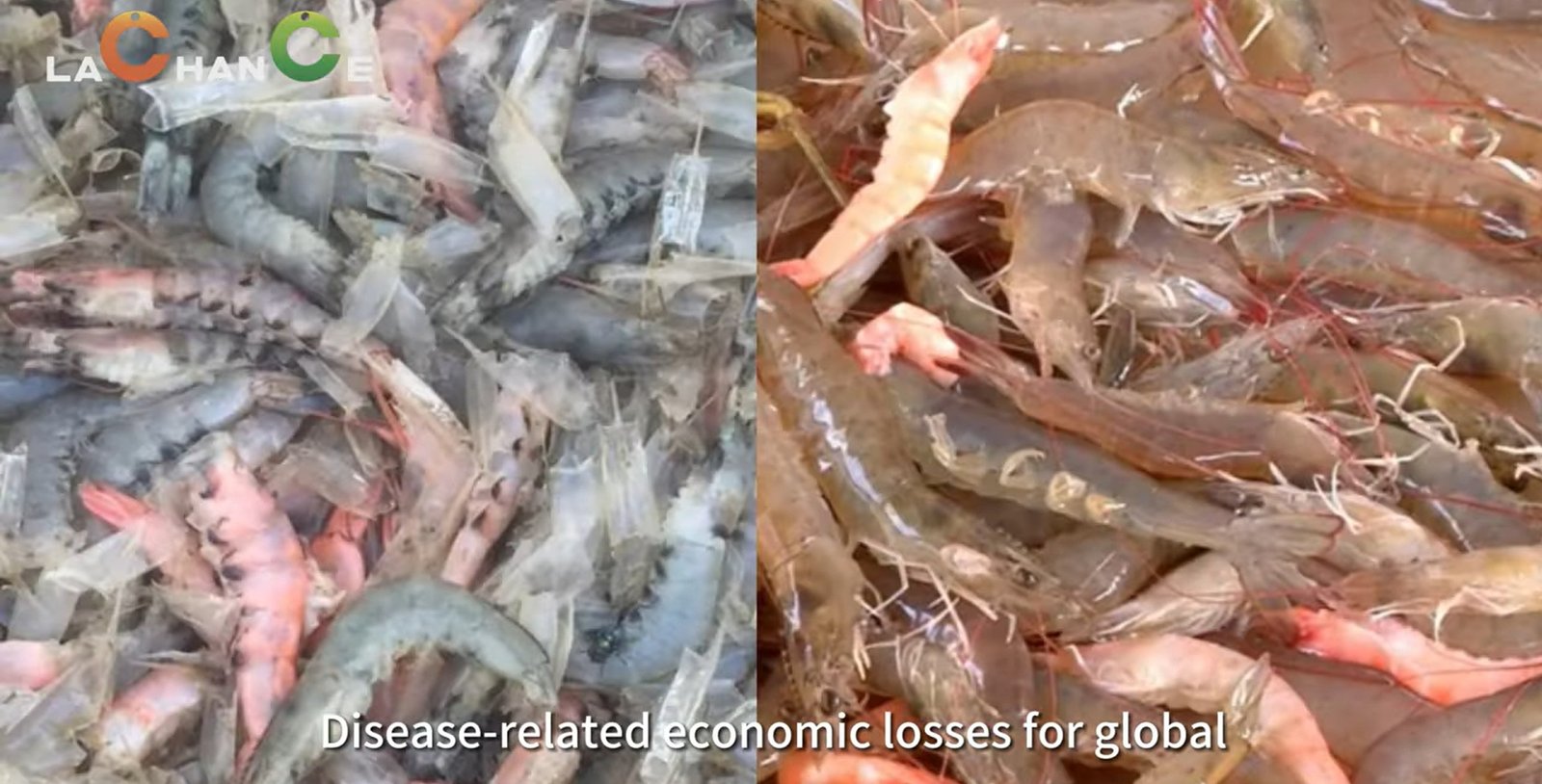
Disease remains another critical threat. Pacific white shrimp, like all shrimp species, are highly susceptible to infectious diseases. Globally, disease-related losses in Pacific white shrimp farming are estimated to reach up to USD 1 billion annually.
Pathogens such as White Feces Syndrome (WFS), Enterocytozoon hepatopenaei (EHP), and Early Mortality Syndrome (EMS), which have previously caused major losses in Southeast Asia, are now gradually emerging in Ecuador, raising concerns over biosecurity and long-term sustainability.
Environmental degradation further complicates the situation. The use of high concentrations of disinfectants and chemical inputs, coupled with the discharge of untreated effluents into surrounding waters, has contributed to pollution and undermined the ecological stability of coastal and marine ecosystems.
These impacts not only threaten biodiversity but also increase disease risks and regulatory pressures on shrimp farms.
To address these challenges while improving efficiency and sustainability, several strategic measures can be implemented.
First, developing alternative protein sources for shrimp feeds is essential. Insect proteins such as black soldier fly larvae, along with single-cell proteins derived from yeast, bacteria, and algae, offer high-quality substitutes for fishmeal and can reduce dependence on volatile marine resources.
Second, feed formulations can be optimized by slightly reducing crude fat content—by approximately 0.5 percent—and incorporating additives such as bile acids that enhance fat digestion and absorption.
These adjustments can improve shrimp growth performance, survival rates, and product quality.
Third, production processes should be modernized through greater use of extruded feeds, which improve feed conversion efficiency and reduce reliance on disinfectants and chemical treatments.
This approach supports better pond hygiene while minimizing environmental pollution. The adoption of automated feeding systems can further enhance performance by ensuring uniform feed distribution, promoting consistent shrimp growth, improving survival rates, and lowering feed conversion ratios.
Effluent management is another critical area for investment. Installing effective effluent treatment facilities can ensure that ammonia nitrogen and other key indicators in discharged water meet environmental standards, reducing pollution and preventing eutrophication of nearby water bodies.
Finally, genetic improvement programs should focus on developing disease-resistant shrimp strains.
Selective breeding for resistance to diseases such as EHP and EMS has already shown promising results, particularly in strains resistant to White Spot Syndrome Virus (WSSV). Continued progress in this area will be vital for long-term industry resilience.
Looking ahead, as advanced farming technologies become more widely adopted, Ecuador’s Pacific white shrimp industry is expected to shift away from inefficient ponds toward higher-quality, better-managed production systems.
Combined with the use of functional additives that protect the hepatopancreas and intestinal health of shrimp, these innovations are likely to drive significant improvements in product quality, environmental performance, and economic sustainability.
Sources: