

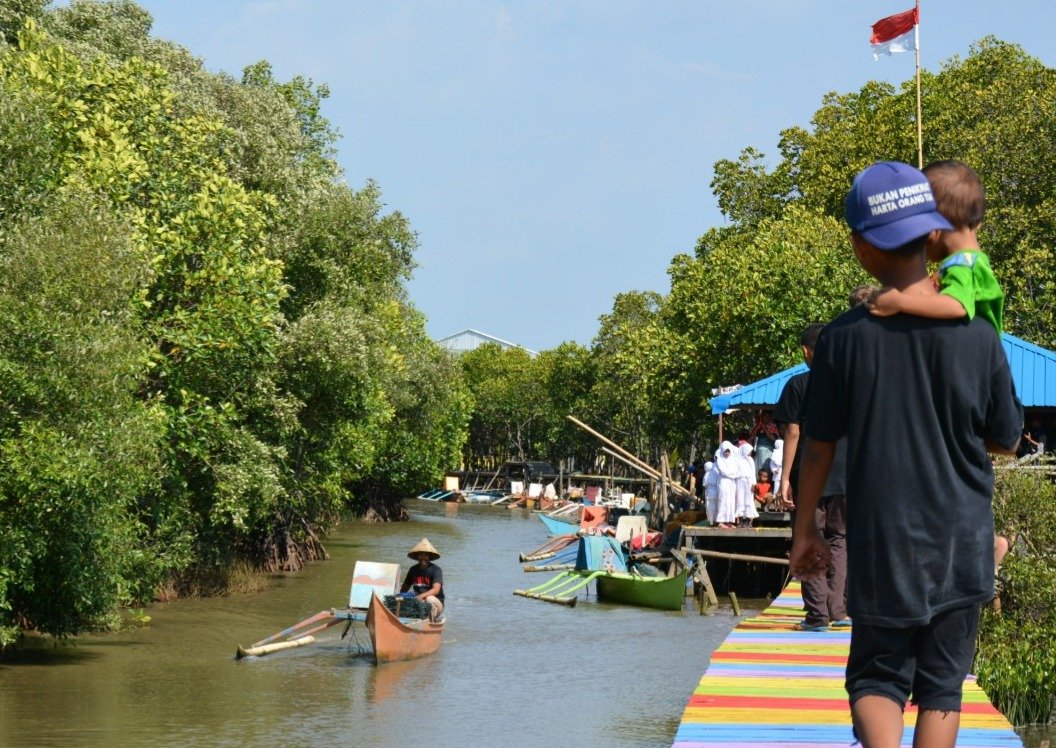
For years, the modernization of fishing vessels has been repeatedly recommended in various studies, but it has never been seriously implemented.
DFW Indonesia
PELAKITA.ID – The government needs to implement tighter controls on fishing activities in Indonesian waters. This control should be carried out by shifting fisheries policies away from a volume-oriented approach toward one that prioritizes product quality and higher value-added outputs.
This emphasis is increasingly important as consumer awareness of high-quality fishery products continues to grow.
Such control can be achieved by improving the quality of catch data collection at fishing ports, promoting the use of environmentally friendly fishing gear, and implementing more measurable and regulated fishing practices.
The Director of Programs at Destructive Fishing Watch (DFW) Indonesia, Imam Trihatmadja, stated that the Indonesian government’s efforts through the Ministry of Marine Affairs and Fisheries to control fishing through the Measured Fishing policy represent a strategic move for the national fisheries sector.
“The Ministry needs to consistently enforce fishing controls, as pressure on fishery resources is becoming increasingly evident,” Imam said.
The Arafura Sea is one of the most favored fishing grounds, used by both industrial-scale fisheries and traditional fishing vessels. According to available data, the current sustainable potential for squid in the Arafura Sea is 9,212 tons, with an allowable catch of 7,370 tons, while squid production in 2022 reached 14,328 tons.
“Squid fishing in the Arafura Sea has exceeded both the sustainable potential and the allowable catch limits. The brakes must be applied immediately in Arafura,” Imam stressed.
Imam also highlighted that fishing activities need to be supported by more modern fleets.
“For years, the modernization of fishing vessels has been repeatedly recommended in various studies, but it has never been seriously implemented,” he noted.
Currently, fishing efficiency, operational safety, hygiene, and product quality remain major challenges for Indonesian fishery products in the global market.
“The modernization of fishing vessels or fleets must be carefully prepared through management models that involve fisher groups, cooperatives, and fisheries business actors,” Imam emphasized.
Imam further reminded that the characteristics of small-scale fisheries—one of Indonesia’s current strengths—need stronger intervention and consolidation so they can move up to a higher level.
“The image of Indonesia’s fisheries, which has long been seen as slum-like, dirty, and poorly organized, must be transformed through vessel and fishing gear modernization, the development of fishing villages, and the establishment of modern fishing ports,” Imam concluded.