
Coral reefs require stable, high-salinity conditions. A sudden drop in salinity—especially in shallow, nearshore areas—can cause immediate physiological shock to coral polyps. Such rapid changes do not allow corals time to adapt, resulting in mass mortality across affected reef zones.
PELAKITA.ID – The massive flooding that struck Sumatera has drawn attention not only for its devastating impact on communities and infrastructure but also for the severe ecological consequences unfolding beneath the sea surface.
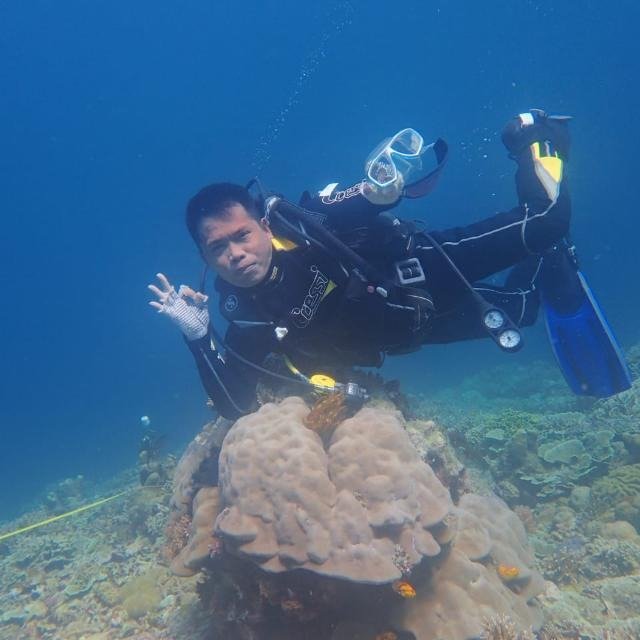
According to Dr. Baru Sadarun, a coral reef expert from Universitas Halu Oleo (UHO) Kendari, the floods pose a critical threat to coral ecosystems due to the large volumes of sediment, freshwater, and pollutants carried into coastal areas.
Coral reefs—unlike mangroves or seagrass ecosystems—are composed almost entirely of animals and lack the biological mechanisms to cope with such disturbances.
As Dr. Sadarun emphasizes, even small amounts of fine sediment can trigger mass mortality among coral colonies.
Sedimentation: A Silent but Rapid Killer
Sadarun explains that terrestrial sediment, which may still benefit plant-based ecosystems like mangroves or seagrass beds, has the opposite effect on coral reefs. Because corals lack roots and cannot absorb nutrients from sediment, any sediment that settles on their surface becomes lethal.
The floodwaters in Sumatera carried enormous amounts of mud and silt that, once dispersed in coastal waters, blanket coral colonies—both adult and juvenile. This smothering effect disrupts coral respiration, blocks photosynthesis, and can lead to rapid, widespread mortality across entire reef systems.
Sediment-induced stress forces coral polyps to produce large quantities of mucus as a defensive response. This energy-draining process weakens corals and increases their vulnerability to various diseases, such as black band disease and other pathogenic infections.
According to Dr. Sadarun, the extent of coral death is directly proportional to the geographic scale of sediment dispersal, making the aftermath of the Sumatra floods particularly alarming.
Turbidity and Light Deprivation
The floodwaters also caused prolonged turbidity, significantly reducing the penetration of sunlight into the water column. For coral reefs, sunlight is essential because their symbiotic algae—zooxanthellae—require light for photosynthesis. Without sufficient sunlight, corals cannot produce the energy needed to survive.
Sadarun stresses that the loss of sunlight in coastal waters effectively means the collapse of coral reef ecosystems.
High turbidity not only stresses existing coral colonies but also prevents the settlement and growth of coral larvae. This halts natural recovery processes, making long-term ecosystem rehabilitation even more challenging.
Freshwater Intrusion: An Acute Shock to Coral Physiology
In addition to sediment, the Sumatra floods brought large volumes of freshwater into marine environments.
Coral reefs require stable, high-salinity conditions. A sudden drop in salinity—especially in shallow, nearshore areas—can cause immediate physiological shock to coral polyps. Such rapid changes do not allow corals time to adapt, resulting in mass mortality across affected reef zones.
Prolonged freshwater intrusion also alters osmotic balance, damages coral tissues, and increases the likelihood of bleaching and bacterial infections. Repeated flooding events, Dr. Sadarun warns, will repeatedly “reset” coral reefs to a degraded state, preventing them from ever reaching a stable recovery phase.
Long-Term Consequences for Coastal Coral Reefs
The impacts are especially severe for fringing reefs, the dominant type of coral reef system found along Sumatra’s coastlines. These reefs are located in shallow, nearshore environments that directly absorb the brunt of floodwaters, making them highly susceptible to sedimentation, turbidity, and freshwater stress.
Fringing reefs also serve as biodiversity hotspots, fisheries nurseries, and natural coastal barriers. Their degradation will have cascading effects on marine life, local fisheries, shoreline stability, and tourism opportunities.
He emphasizes that repeated disturbances from recurring floods will wipe out juvenile coral recruitment, degrade water quality, escalate coral disease prevalence, and potentially lead to long-term collapse of reef ecosystems.
Conclusion
The ecological analysis by Dr. Sadarun highlights the urgent need to view the Sumatra floods not only as a terrestrial disaster but also as a marine ecological crisis.
The combined impacts of sedimentation, turbidity, freshwater influx, and coral diseases represent a multi-layered threat capable of destroying coral reef ecosystems within days or weeks.
Without intervention, recurrent flooding will eliminate the natural capacity of coral reefs to recover and regenerate.
To mitigate these impacts, Dr. Sadarun calls for integrated watershed management, erosion control, mangrove rehabilitation, improved environmental monitoring, and stronger coastal planning.
These actions are not merely environmental initiatives—they are essential strategies to safeguard Indonesia’s coral reefs, which are among the most biodiverse and economically vital marine ecosystems in the world.
About Dr. Baru Sadarun
Dr. Baru Sadarun, S.Pi., M.Si., is one of the leading academics at Halu Oleo University (UHO). Born in Raha on July 23, 1971, he is widely recognized as a marine science expert with deep commitments to environmental conservation, coastal ecosystem rehabilitation, and modern fisheries science.
As an Associate Professor at the Faculty of Fisheries and Marine Science (FPIK) UHO, Dr. Sadarun has dedicated more than two decades of his career to science-based education, research, and environmental advocacy.
His academic journey was shaped by some of Indonesia’s strongest marine science institutions—earning a Bachelor of Marine Science and Technology from Sam Ratulangi University (1995), a Master’s degree in Marine Biology from IPB University (1999), and ultimately a Doctorate in Marine Technology from IPB University in 2011.
Dr. Sadarun’s professional career includes strategic roles at the Ministry of Marine Affairs and Fisheries, where he served as Head of Marine Ecosystem Rehabilitation. He is also an experienced diving instructor for various international organizations and a national competency assessor specializing in coral reefs and scientific diving.
At UHO, he has led several coastal and marine research centers and served as Head of the Department of Marine Science, which has earned excellent accreditation and international recognition.
His scientific contributions are reflected in dozens of national and international publications, covering coral reef studies, marine biology, coral diseases, sponge metabolites, and marine pharmacology. Beyond research publications, he has authored reference books on coral identification and conservation guidelines that are widely used across Indonesia.
Dr. Sadarun is also frequently called upon by government agencies to assess and resolve cases of marine ecosystem damage. His expertise has been instrumental in verifying coral reef destruction caused by ship groundings in Banten, West Java, East Flores, and most recently Raja Ampat in 2025.
His accomplishments have earned him broad recognition, including the UNESCO–UN Man and Biosphere Award and the Young Researcher Award for Environmental Conservation from the Indonesian Institute of Sciences (LIPI).
With his strong academic, professional, and research foundation, Dr. Baru Sadarun has emerged not only as a scholar who deeply understands the complexities of modern marine science, but also as a leader capable of guiding higher education into an era of advanced science, technology, and the blue economy. It is no surprise that he is now regarded as one of the most promising candidates to lead Halu Oleo University in the coming term.
Editor Denun