
PELAKITA.ID – Makassar—Amid the rising threats of climate change, increasingly felt from the shoreline to the city center, the Climate Change Study Center (PSPI) of the Research and Community Service Institute (LPPM) at Hasanuddin University (Unhas) continues to take on a strategic role.
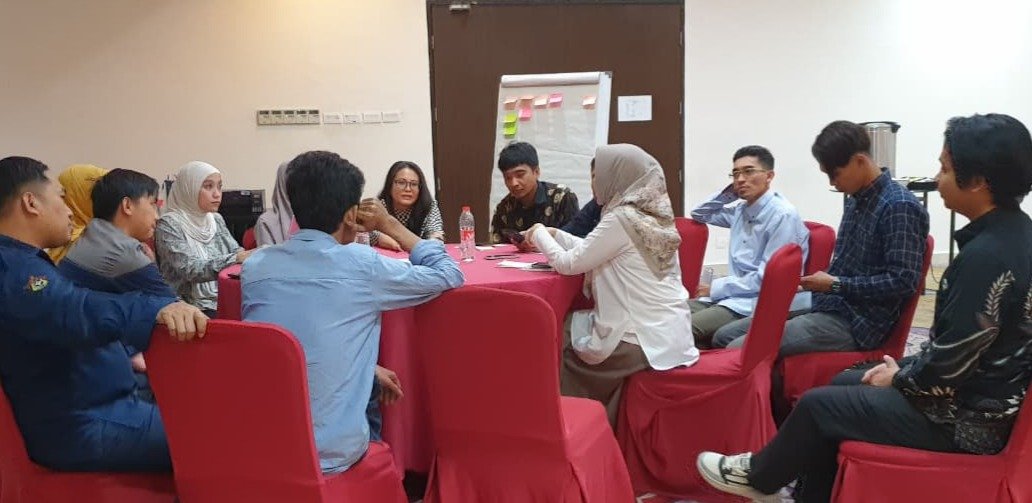
On Tuesday, 25 November 2025, PSPI LPPM Unhas, together with the Ministry of Environment and the Hanss Seidel Foundation (HSF), held a Brainstorming Forum at Swiss-Belhotel Makassar.
The meeting served as a space to exchange ideas, uniting diverse perspectives to craft adaptation and mitigation strategies for Makassar—a coastal city now on the frontline of climate risks.
Carrying the theme “Multi-Stakeholder Synergy in Formulating Climate Change Adaptation and Mitigation Programs in Makassar City: From Regional Policy to Coastal Community Action,” the activity was designed to produce training modules for students participating in the Climate Change Thematic KKN, particularly those focusing on climate impact mapping in Makassar’s coastal and urban zones.
Collecting Ideas for Concrete Action
The Head of PSPI LPPM Unhas, Dr M. Rijal Idrus opened the session with sincere appreciation for the 32 participating institutions—from government agencies, Unhas faculties, other universities, to environmental NGOs.
“This is a first step to listen and document the perspectives of today’s speakers. We aim to formulate concrete and beneficial ideas,” he said.
He emphasized that all insights generated in the forum would be compiled into the Climate Change Thematic KKN module, enabling students to engage with communities not only equipped with academic knowledge but also with localized insights verified by multiple stakeholders.
“We hope today’s outputs and recommendations will guide coastal communities in strengthening adaptation and mitigation strategies against hydrometeorological disasters that may occur at any time,” he added.
The Role of Partners in Strengthening Coastal Resilience
Representative of the Hanss Seidel Foundation (HSF), Nila Puspita, reaffirmed HSF’s commitment to enhancing the capacity of coastal communities facing climate change. Beyond supporting the Unhas thematic KKN program, HSF also encourages cross-institutional collaboration to strengthen ecological and social resilience in coastal communities.
“This thematic KKN program is a learning platform for students and a means to reinforce adaptation and mitigation strategies at the coastal and marine community level,” she noted.
Why Climate Change Has Become an Urgent Issue
According to Azri Rasul, climate change is no longer a distant global discourse but a lived reality for the people of Makassar.
He outlined several observable symptoms, including rising air temperatures, sea-level rise threatening coastal neighborhoods, extreme rainfall triggering floods, high waves disrupting fishing activities, and shifting seasonal patterns affecting fisheries and agriculture.
Scientifically, climate change has three major dimensions:
-
Physical dimension (atmosphere–ocean–land):
Rising temperatures, sea-level rise, and increased intensity of extreme weather. -
Ecological dimension:
Disturbed coastal ecosystems, coral reef degradation, and loss of biodiversity. -
Socio-economic dimension:
Community vulnerability, forced migration, declining fisher income, rising climate-related diseases, and risks of resource conflict.
Makassar, as a densely populated coastal city, faces all these dimensions simultaneously.
Legal Framework for Climate Change Response in Indonesia
Indonesia has established several key regulations to address climate change, including:
-
Law No. 31/2009 on Meteorology, Climatology, and Geophysics—emphasizing the importance of climate information for disaster mitigation.
-
Law No. 32/2009 on Environmental Protection and Management (PPLH)—mandating climate impact control as part of environmental protection.
-
Presidential Regulation No. 61/2011 on the National Action Plan for Greenhouse Gas Emission Reduction (RAN-GRK).
-
Presidential Regulation No. 98/2021 on the Implementation of Carbon Economic Value (NEK).
-
Nationally Determined Contribution (NDC)—committing Indonesia to reduce emissions by 31.89% independently and 43.20% with international support by 2030.
-
RPJPN 2025–2045, which prioritizes climate adaptation and mitigation in national development.
With this legal foundation, every region—including Makassar—is expected to strengthen localized climate action plans.
Building Hope and Resilience for Makassar
This brainstorming activity is not merely a discussion; it forms part of a long journey toward building a climate-resilient coastal city and serves as material for Hasanuddin University students preparing for their upcoming KKN.
Through collaboration between government, academics, students, and local communities, Makassar—and other districts across South Sulawesi—are expected to better anticipate climate threats while fostering local innovation for a safer future.
The forum stands as a meeting point of ideas, where scientific knowledge blends with lived experience, and where shared hopes for the future take shape. Addressing climate change is not the duty of a single institution—it is the shared responsibility of all inhabitants of this planet.
(KA)