
As a megadiverse country rich in resources yet ecologically fragile, Indonesia reflects many of the warnings Herman Daly articulated. Over the past few decades, much of Indonesia’s development has relied on the expansion of oil palm plantations, mining, and large-scale infrastructure. Yet these gains often come at steep environmental and social costs: deforestation, biodiversity loss, pollution, and inequality.
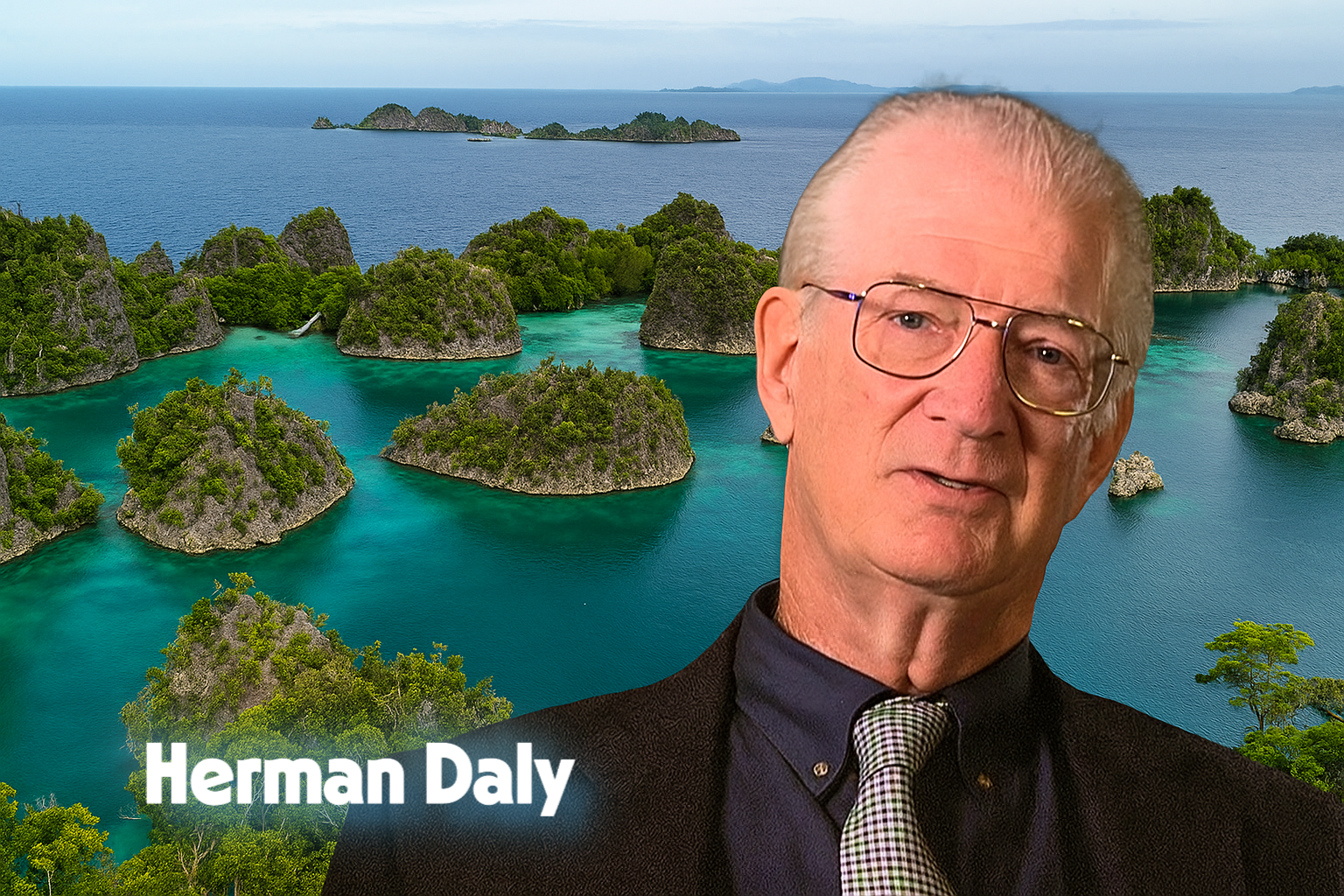
PELAKITA.ID – Amidst the global climate crisis and environmental degradation, the name Herman Daly continues to echo as a clear and wise voice in the conversation about development and the future of our planet.
Daly, an American ecological economist, not only offered a sharp critique of limitless economic growth but also introduced a radical yet increasingly relevant alternative: the steady-state economy—a concept that holds particular resonance for a country like Indonesia.
Who Was Herman Daly?
Herman Daly (1938–2022) was a pioneering figure in the field of ecological economics, a discipline that bridges economics, ecology, and ethics.
After earning his PhD in economics from Vanderbilt University, Daly taught at Louisiana State University and later served as a senior economist at the World Bank (1988–1994), where he consistently advocated for truly sustainable development—even when it went against the mainstream global policy tide.
A Legacy of Thought: Economics Within Earth’s Limits
Daly rejected the idea that unlimited economic growth should be the primary goal of development. He warned that our planet has ecological and physical limits, and economic systems must respect these boundaries.
From this view emerged the concept of a steady-state economy—a system in which resource consumption and waste production remain in balance with nature’s regenerative and absorptive capacities.
He also criticized the use of Gross Domestic Product (GDP) as the sole measure of progress. Instead, Daly championed alternative indicators such as the Genuine Progress Indicator (GPI), which incorporates quality of life, income distribution, and environmental costs.
Development Without Growth?
Daly did not oppose development—but he made a crucial distinction between growth and development. Growth refers to an increase in size, while development means an improvement in quality and efficiency. For high-consumption societies, he argued, what is needed is development without growth.
At the World Bank, Daly advocated for:
-
Cap-auction-trade systems to limit resource extraction.
-
Ecological tax reform.
-
Regulations on global trade that protect local environments and social equity.
Strong Relevance to Indonesia
As a megadiverse country rich in resources yet ecologically fragile, Indonesia reflects many of the warnings Herman Daly articulated. Over the past few decades, much of Indonesia’s development has relied on the expansion of oil palm plantations, mining, and large-scale infrastructure. Yet these gains often come at steep environmental and social costs: deforestation, biodiversity loss, pollution, and inequality.
Daly’s thinking encourages Indonesia to:
-
Rethink the meaning of progress. Should we celebrate rising GDP if it comes at the expense of environmental collapse and marginalization of indigenous communities?
-
Redesign fiscal and economic policies. For instance, by implementing carbon taxes and incentivizing circular economies and renewable energy.
-
Improve quality of life rather than simply increasing consumption. Especially amid rapid urbanization and the growing threats of climate change.
Inheriting Moral Courage
More than just an academic, Herman Daly was a champion of ethics and sustainability. He dared to challenge the status quo and insisted on the importance of intergenerational justice—the idea that future generations deserve to live on a habitable planet.
For Indonesia, which is now rethinking its development direction in the era of the new capital city and facing ecological challenges from Sabang to Merauke, Daly’s intellectual legacy provides a moral and intellectual compass: that true development is not the biggest, but the wisest.
Conclusion: Building Within Limits, Living in Harmony
Herman Daly reminded the world that economics is, in essence, a subsystem of the ecological whole—not the other way around. Humanity cannot thrive beyond the limits of the planet. His ideas are not only visionary but also deeply grounded and applicable to countries like Indonesia.
Today, as the world searches for a new direction amid the climate crisis, Daly has lit a torch of thought that can guide us toward a future of just, sustainable, and humane development. The only question that remains is: do we have the courage to follow his path?