
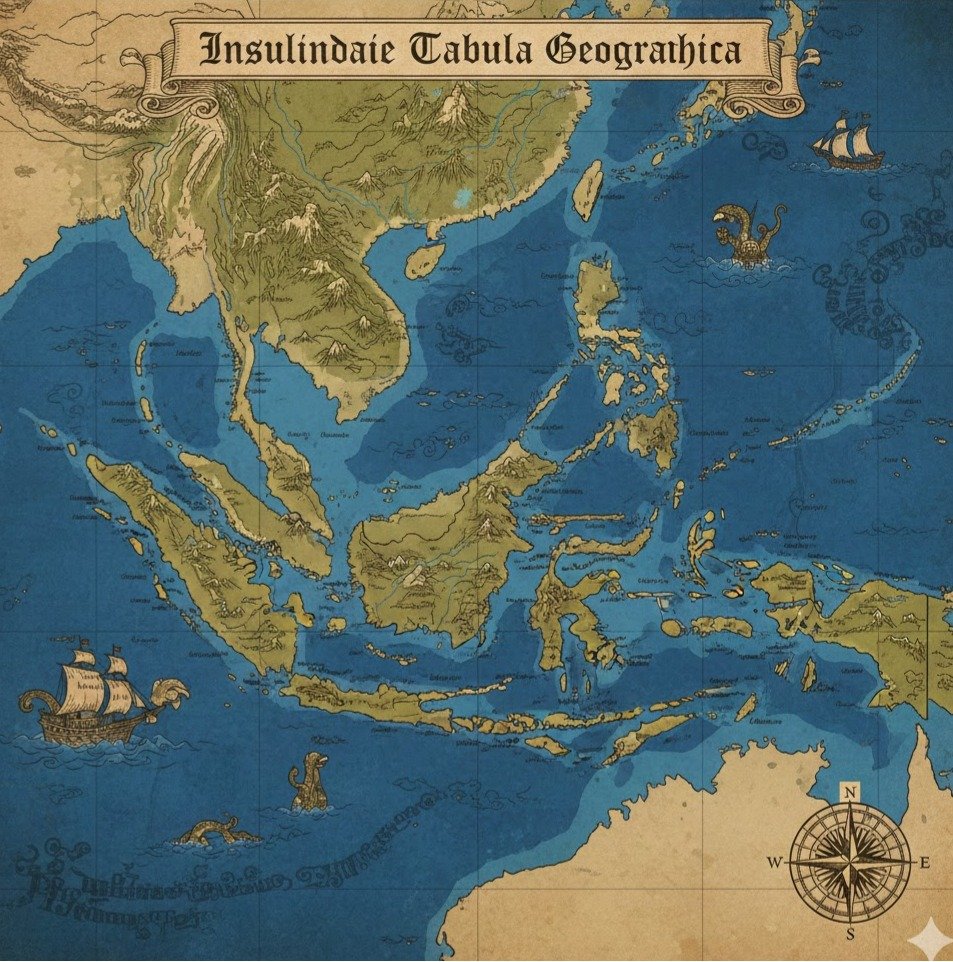
PELAKITA.ID – Indonesia, the world’s largest archipelago with over 17,000 islands, is a nation defined by its maritime diversity. While famed for giants like Java and Sumatra, its true uniqueness often lies in islands defined not by sheer size, but by a combination of scale, extraordinary potential, and distinct identity.
Here is an identification of Indonesia’s unique islands, categorized by their unique proposition.
Category I: The Demographic & Economic Powerhouses
These islands are unique due to their outsized influence on the nation’s trajectory.
-
Java: Unique by Concentrated Human Power. While only the 4th largest by land area, Java is phenomenally unique as the epicenter of human, economic, and political power. It is home to over 56% of Indonesia’s population (making it one of the most populous islands on Earth) and contributes more than 58% to the national GDP. Its uniqueness lies in this intense concentration. The potential—and challenge—is immense: driving national growth through mega-projects like the new capital city (Nusantara in Kalimantan, ironically off Java), while managing extreme density, environmental stress, and infrastructure demands. Java’s potential is the potential of Indonesia’s engine room.
-
Sumatra: Unique by Resource Breadth. The sixth-largest island in the world, Sumatra’s uniqueness is its role as the “resource and agrarian backbone.” It holds vast potential in energy (being a major producer of oil, gas, and coal), agricultural commodities (palm oil, rubber, coffee), and geothermal power. Its size allows for this multi-sectoral wealth. The challenge and potential lie in sustainable management, balancing extraction and agriculture with critical conservation of ecosystems like the Leuser, one of the last places on Earth where orangutans, tigers, rhinos, and elephants coexist.
Category II: The Ecological & Cultural Frontiers
These islands are global treasures of biodiversity and human heritage.
-
Borneo (Kalimantan): Unique by Primal Scale and Transformation. The Indonesian portion of the world’s third-largest island is a land of extremes. Its uniqueness is defined by containing one of the planet’s oldest and largest rainforests, alongside experiencing some of the most rapid transformation. Its potential is dual: as a carbon sink of global importance and a region of massive agricultural (especially palm oil) and mining wealth. The future of Kalimantan is a frontline in the global climate battle, now further complicated by the development of the new capital, Nusantara, which promises economic uplift but poses significant ecological risks.
-
New Guinea (Papua): Unique by Untapped Biological and Mineral Wealth. Home to the western half of the world’s second-largest island, Papua is Indonesia’s final frontier. Its uniqueness is unparalleled: it possesses the largest remaining tracts of pristine tropical wilderness in the Asia-Pacific, glaciers in the tropics (though rapidly receding), and incredible cultural diversity with over 250 distinct ethnic groups. Its potential is colossal but fraught: vast mineral resources (notably the Grasberg gold and copper mine), immense biodiversity yet to be fully cataloged, and a growing agricultural footprint. Realizing its economic potential while preserving its fragile ecosystems and respecting indigenous rights is its defining challenge.
-
Bali: Unique by Cultural Branding Power. Tiny in size, Bali’s uniqueness is its soft power and cultural economy. It is not just a tourist destination; it is a globally recognized brand synonymous with art, spiritual harmony, and managed landscapes (like its UNESCO-recognized subak irrigation system). Its potential is a model for cultural tourism, but it faces severe threats from over-tourism, water scarcity, and environmental degradation. Bali’s future hinges on transitioning to a quality-over-quantity model.
Category III: The Strategic & Specialized Entities
These islands hold unique positions due to geography or specific roles.
-
Sulawesi: Unique by Form and Marine Potential. Shaped like a twisted orchid, Sulawesi’s bizarre form gives it an exceptionally long coastline and a central position in the Coral Triangle. Its uniqueness is its marine biodiversity hotspot status (home to endemic species like the maleo bird and babirusa) and its role as a maritime crossroads. Its potential is as a hub for sustainable fisheries, seaweed farming, and marine tourism, leveraging its incredible underwater life.
-
The Maluku Islands (The Spice Islands): Unique by Historical Legacy and Niche Resources. Historically, these were the fabled Spice Islands, whose cloves and nutmeg shaped global trade and colonial history. Today, their uniqueness lies in this legacy and their position as a “fish basket.” They possess extraordinary potential in sustainable spice production, boutique tourism, and especially in fisheries, sitting at the heart of one of the world’s most productive marine areas.
-
The Riau Islands (especially Batam and Bintan): Unique by Proximity-Powered Industry. Located a stone’s throw from Singapore, their uniqueness is their strategic economic function as a special economic zone. They are manufacturing, logistics, and tourism extensions of the global hub next door. Their potential is tied to attracting foreign direct investment and high-value industries, though they must compete in an increasingly crowded regional landscape.
Conclusion: Uniqueness as a Double-Edged Sword
Indonesia’s islands are unique not in isolation, but as a complex, interdependent system. Java’s consumption is fed by Sumatra’s and Kalimantan’s resources. Bali’s tourism model is both an inspiration and a caution for developing regions in Papua.
The potential of each island—whether economic, ecological, or cultural—is immense, but so are the challenges of governance, equity, and sustainability.
The uniqueness of the Indonesian archipelago lies in this very tension: its ability to harness the diverse potential of its islands will determine its future as a major 21st-century power, while their preservation is critical for global biodiversity and climate stability. The archipelago is a microcosm of both the promises and perils of our planet.