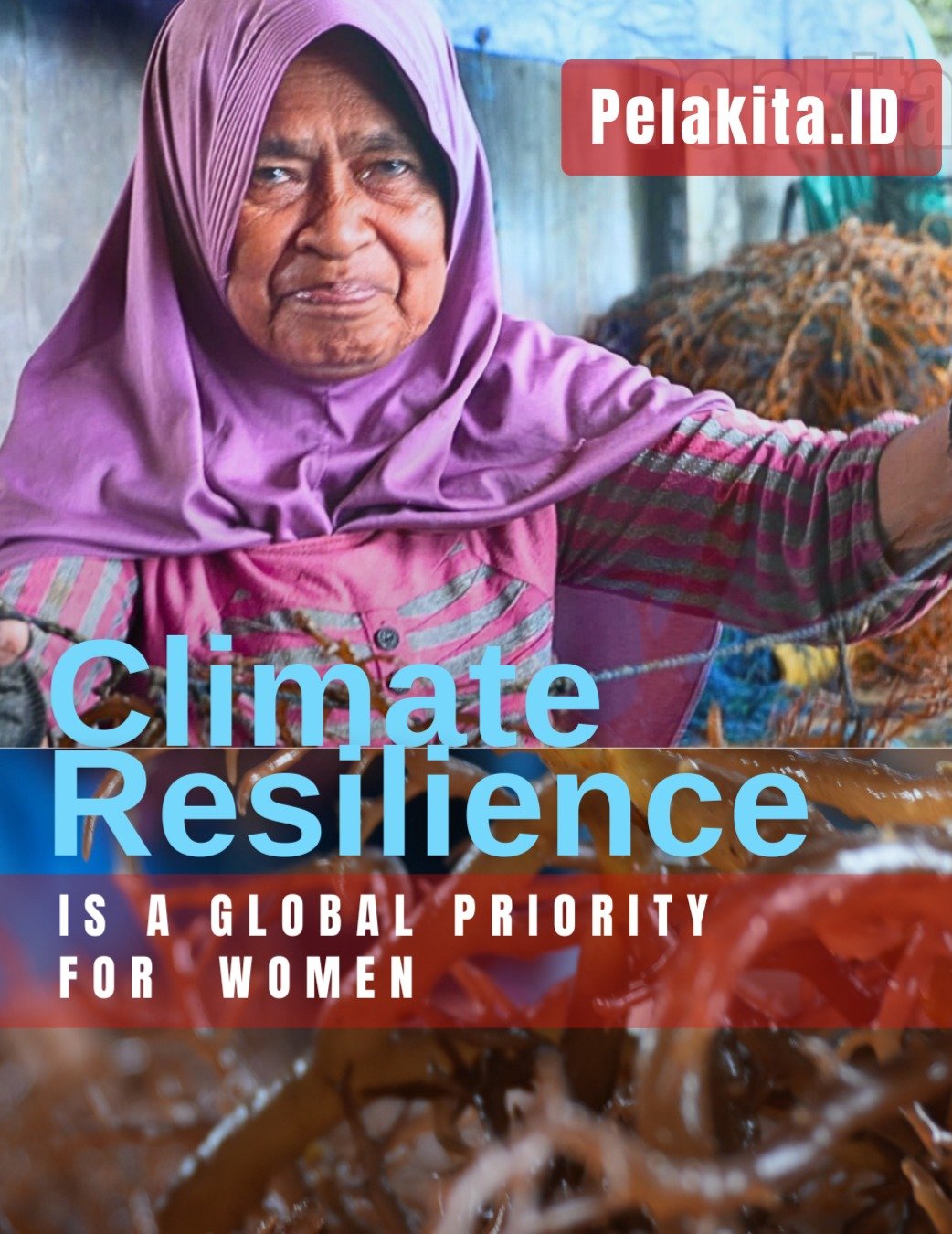


Beyond policies, power also operates through the construction of discourses. Environmental crises are often framed in ways that benefit elites while disadvantaging the vulnerable.
PELAKITA.ID – In the study of political ecology, power does not only determine who owns and controls natural resources, but also how nature itself is understood, managed, and protected.
Environmental discourses are shaped by political and economic interests, which regulate who can exploit, who benefits, and who bears the ecological costs.
This approach draws on insights from scholars such as Piers Blaikie and Harold Brookfield, who in Land Degradation and Society (1987) argued that environmental problems are rarely just ecological—they are deeply tied to political and economic structures.
Political ecology thus sees environmental degradation not as a “technical problem,” but as the outcome of unequal access to land, capital, and decision-making power.
Power in Environmental Policy-Making
States and large corporations play dominant roles in controlling environmental policy. They decide how resources are managed, who gets access, and how ecological impacts are distributed among social groups.
David Harvey’s idea of the “spatial fix” explains how capital constantly seeks new territories to exploit, often through state-backed projects. In developing countries, including Indonesia, environmental regulations often privilege growth over protection.
This reflects what Neil Smith termed the “production of nature”—where natural landscapes are reshaped to serve capitalist expansion.
For instance, dams, highways, and industrial zones are promoted as national development strategies. Yet they often damage ecosystems and displace local communities that have long managed lands sustainably.
This aligns with James Scott’s critique in Seeing Like a State (1998): top-down schemes designed for efficiency often erase local knowledge and create ecological harm.
Narratives and Discourses in Environmental Management
Beyond policies, power also operates through the construction of discourses. Environmental crises are often framed in ways that benefit elites while disadvantaging the vulnerable.
Michel Foucault’s notion of “power/knowledge” helps explain how narratives—such as “sustainability” or “development”—become instruments of control.
When corporations promote “green certifications” or “eco-labels,” they often perform greenwashing, repackaging exploitation as sustainability.
Similarly, conservation discourse is shaped by what Arturo Escobar calls “environmentalism of the elite,” where global institutions impose models of protection that marginalize Indigenous communities.
Studies show that Indigenous ecological knowledge often ensures sustainability better than bureaucratic interventions, echoing Elinor Ostrom’s work on common-pool resource governance, which demonstrates the effectiveness of community-led systems in managing resources.
Resistance to Power Domination
Despite structural domination, local communities are not always passive. They resist exploitative practices through collective action and environmental movements.
Paulo Freire’s pedagogy of the oppressed inspires many grassroots movements that connect ecological struggles with broader fights for justice. In Indonesia, farmers resist monoculture plantations, while coastal communities protest reclamation projects that destroy fishing grounds.
Scholars such as Joan Martinez-Alier, in The Environmentalism of the Poor (2002), document how marginalized groups—peasants, Indigenous peoples, fisherfolk—lead ecological struggles not only to protect the environment but also to defend their livelihoods and cultural survival.
This current of thought is often called ecological justice or environmental justice, emphasizing that the burden of ecological crisis falls disproportionately on the poor.
Toward a More Democratic Model of Environmental Governance
Global ecological challenges demand more democratic, participatory, and community-centered governance. Nancy Fraser’s concept of “participatory parity” suggests that justice is only possible when marginalized voices are included in decision-making on equal terms.
This perspective echoes Robert Bullard, a pioneer of environmental justice in the U.S., who showed how race and class shape exposure to pollution and exclusion from policymaking.
Applied globally, his insights highlight the need for accountability so that development decisions do not only benefit elites but also safeguard ecosystems and community well-being.
Strengthening governance therefore requires two moves: (1) recognizing traditional ecological knowledge as part of the solution, not a barrier, and (2) reforming institutions so that power asymmetries between states, corporations, and communities are reduced.
Conclusion
Political ecology teaches us that the environment is never neutral—it is always entangled with power, narratives, and struggles. Nature is not just “out there” to be preserved or exploited, but is continuously produced through political and economic processes.
Thinkers from Blaikie and Brookfield to Escobar, Ostrom, and Harvey remind us that ecological crises are inseparable from inequality, capitalism, and governance structures.
Likewise, activists and communities on the ground—from farmer associations to Indigenous peoples—demonstrate that resistance and alternative practices are possible.
Thus, building a just and sustainable ecology requires reconfiguring power. Only through democratized, participatory, and community-driven governance can the environment be secured not as a commodity, but as a shared home for future generations.
References
-
Blaikie, P., & Brookfield, H. (1987). Land degradation and society. London: Routledge.
-
Bullard, R. D. (1990). Dumping in Dixie: Race, class, and environmental quality. Boulder, CO: Westview Press.
-
Escobar, A. (1995). Encountering development: The making and unmaking of the Third World. Princeton, NJ: Princeton University Press.
-
Escobar, A. (1999). After nature: Steps to an antiessentialist political ecology. Current Anthropology, 40(1), 1–30.
-
Foucault, M. (1980). Power/knowledge: Selected interviews and other writings 1972–1977 (C. Gordon, Ed.). New York: Pantheon.
-
Fraser, N. (2008). Scales of justice: Reimagining political space in a globalizing world. New York: Columbia University Press.
-
Harvey, D. (2001). Spaces of capital: Towards a critical geography. Edinburgh: Edinburgh University Press.
-
Martinez-Alier, J. (2002). The environmentalism of the poor: A study of ecological conflicts and valuation. Cheltenham: Edward Elgar.
-
Ostrom, E. (1990). Governing the commons: The evolution of institutions for collective action. Cambridge: Cambridge University Press.
-
Scott, J. C. (1998). Seeing like a state: How certain schemes to improve the human condition have failed. New Haven: Yale University Press.
-
Smith, N. (2008). Uneven development: Nature, capital, and the production of space (3rd ed.). Athens, GA: University of Georgia Press.
Sorowako, 26 September 2025