

PELAKITA.ID — Amid efforts to strengthen Indonesia’s research ecosystem, the name Hasnawati Saleh, often affectionately called Nana Saleh, stands out as one of the scientists playing an important role in building bridges of collaboration between Indonesia and Australia.
Her contributions are particularly visible through her involvement in the PAIR Project (Partnership for Australia–Indonesia Research), a research cooperation initiative managed by The Australia-Indonesia Centre.
The PAIR program is designed to strengthen research relations between the two countries in a more strategic way—not only through academic projects, but also through collaborations involving governments, universities, industry, and communities.
In that context, although she considers PAIR to be a collective, team-based system of work, Nana has nonetheless played an important role as a connector among the various stakeholders involved in the program, particularly in Eastern Indonesia, especially in South Sulawesi.
As a scientist with an international educational background, Nana Saleh’s academic journey reflects the character of a global researcher who remains rooted in the needs of national development.
She earned her doctoral degree in biomedical science from University of Melbourne, one of Australia’s leading research universities. Earlier, she completed her master’s degree at University of Queensland.
These cross-country academic experiences helped shape her perspective on the importance of international research networks for the advancement of science in Indonesia.
Her contributions do not stop within academia alone. In her various professional roles, she has actively encouraged the emergence of a more collaborative research system.
She has been involved in developing several important institutions that support Indonesia’s national research ecosystem, including her role as one of the early figures in the Indonesian Academy of Young Scientists (ALMI), an organization that brings together young Indonesian scientists to strengthen the role of science in development.
Within the PAIR framework, Nana’s contributions are clearly visible in efforts to expand research collaboration in Sulawesi.
The PAIR Sulawesi program connects various universities—including Hasanuddin University—with research partners in Australia to develop studies that are relevant to regional development needs.
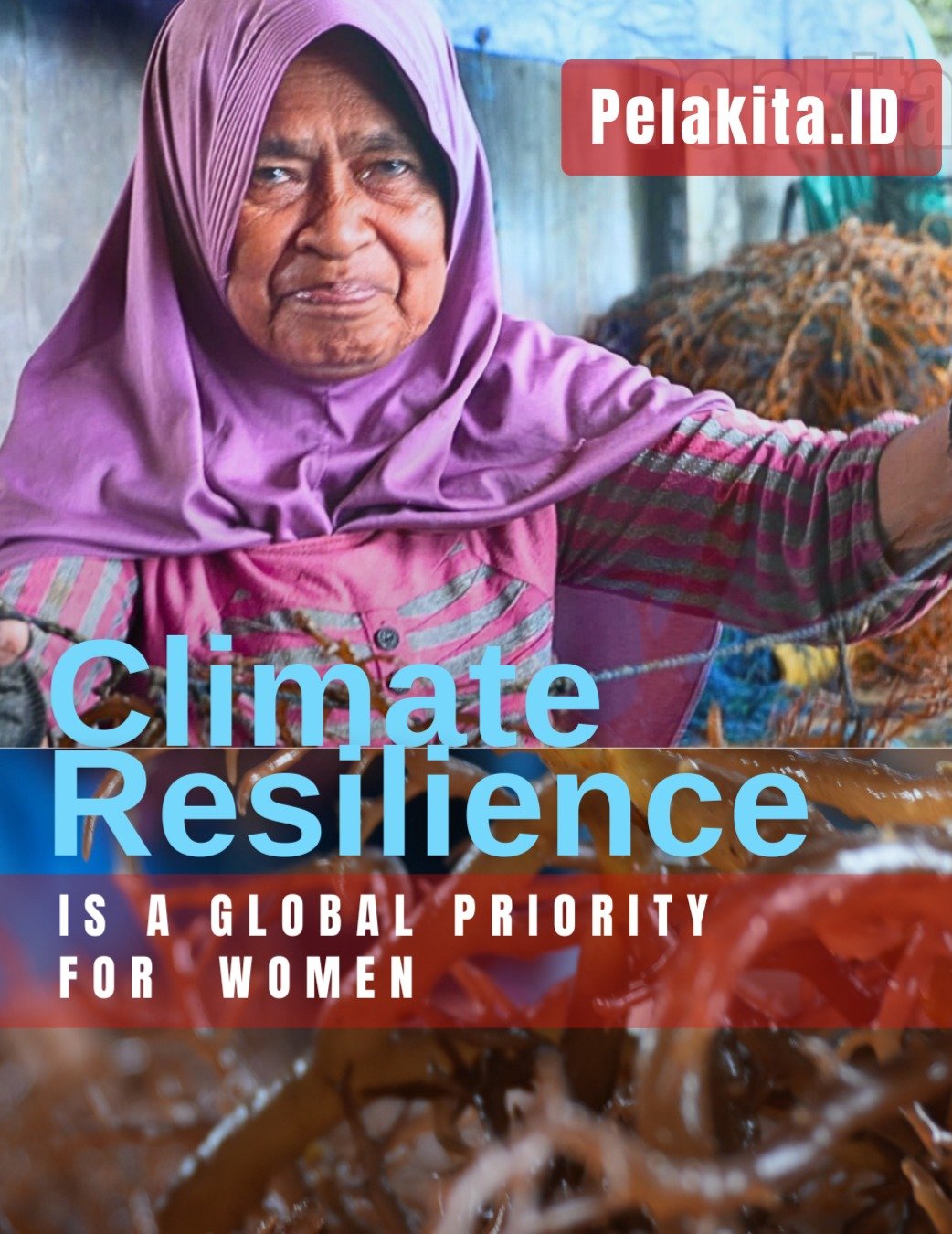
One of the key focuses of the program is the development of local resource-based economies, such as the seaweed industry in South Sulawesi.
Through collaborative research, Indonesian and Australian researchers are working to strengthen the value chain of the industry—from production aspects and processing technology to policies that support the sector’s sustainability.
The approach built within PAIR does not only position universities as centers of knowledge production, but also as strategic partners for local governments and industry actors.
In this model, research does not stop at academic publications; it is expected to contribute directly to public policy and economic development.
An important legacy of Nana Saleh’s work lies in the perspective she promotes: that research should not stand alone.
It must be connected to community needs, policy-making processes, and innovations that can be practically applied.
At a time when development challenges are becoming increasingly complex—ranging from climate change and economic transformation to coastal development—cross-national collaboration is becoming ever more essential. In this context, the cooperation model developed through PAIR offers an example of how research can serve as a platform for knowledge diplomacy between two countries.
Furthermore, Nana’s work also reflects the importance of women’s scientific leadership in a research world that has often been dominated by men.
She has received numerous national and international awards throughout her academic and professional career. In 2017, she was selected to participate in the International Visitor Leadership Program (IVLP) in the United States, nominated by USAID Indonesia.
The program, organized by the U.S. Department of State, brought together 48 women leaders from 48 countries under the theme “Hidden No More – Empowering Women Leaders in STEM.”
During her doctoral studies, she was awarded the Melbourne International Research Scholarship (MIRS) and the Melbourne International Fee Remission Scholarship (MIFRS) at the University of Melbourne (2006–2010).
Earlier, she received the Australian Development Scholarship (2000–2002) to pursue graduate studies in Australia, as well as the Indonesian Research and Technology Scholarship in 1997 and the Association for International Education Japan Scholarship in 1996.
Her academic achievements were recognized even earlier during her student years. She received the EGC Textbook Scholarship in 1994 and the ICMI Scholarship in 1993.
Prior to that, in 1990–1991, she was selected for a Special Year 12 Science Class Scholarship funded by the South Sulawesi Government, a program designed for top students representing their regencies in regional science competitions, where they received intensive mentorship from selected teachers.
***
Beyond academia, she actively contributes to science outreach initiatives, including the “Scientists Go to School” program, and is engaged in alumni and community organizations that support education and international collaboration.
Through her roles in various international scientific networks, she demonstrates that Indonesian scientists can actively participate in global conversations about science and innovation.
Another equally important legacy is her ability to build networks across generations of researchers. In many PAIR activities, she has encouraged the involvement of young researchers, regional academics, and local stakeholders to participate together in the research process.
In this way, collaboration not only produces new knowledge but also strengthens research capacity in the regions.
Ultimately, the contribution of Dr. Nana Saleh can be seen as part of a broader effort to position Indonesia within the global map of research collaboration.
Through the networks she has built—both domestically and internationally—she has helped create space for Indonesian scientists to collaborate, exchange ideas, and generate knowledge relevant to the future.
This legacy may not always appear in the form of a single project or institution. Rather, it lives within growing networks of collaboration, within generations of researchers connected across borders, and within the idea that science can serve as a bridge that brings together development interests and the spirit of international cooperation.
___
Author: Denun
Gowa, 10 March 2026