

For President Prabowo’s administration, Bahtiar’s program offers a valuable blueprint for empowering provinces to become engines of growth.
PELAKITA.ID – Dr. Bahtiar Baharuddin’s Cavendish banana cultivation program in South Sulawesi stands as a compelling example of how agriculture can be a driver of local economic development, food sovereignty, and community pride.
Far more than a simple agricultural initiative, the program embodies the principles of civic agriculture, where food production is closely linked to community empowerment and shared prosperity.
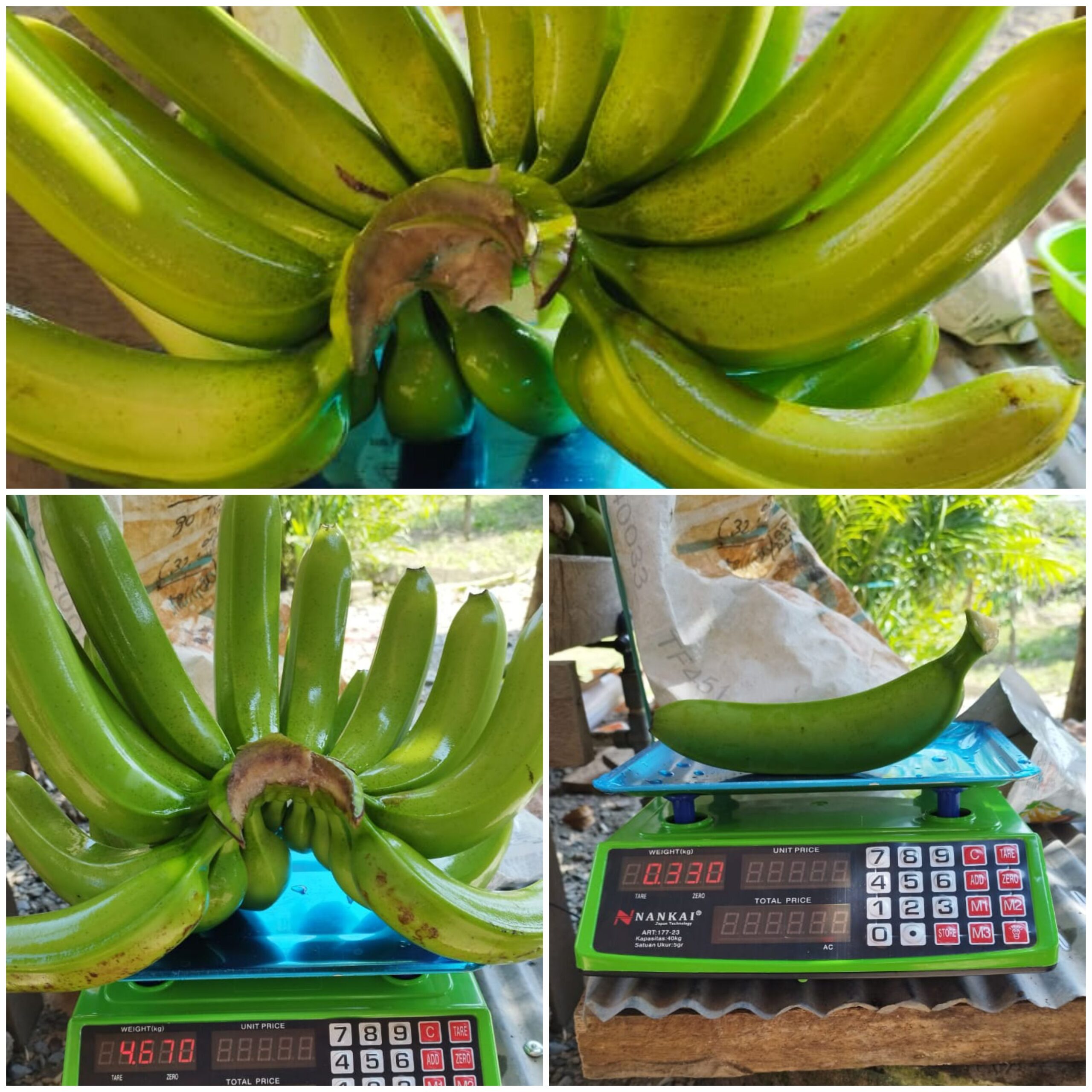
At the heart of this initiative is the empowerment of smallholder farmers. Rather than depending on corporate-owned plantations, the program encourages farmers to plant Cavendish bananas in their yards and on underutilized lands.
Partnerships with private companies such as PT Letawa, under Astra Agro Lestari, provide farmers with technical support, market access, and even credit assistance through microloans.
This approach reconnects food production with community life and reflects Thomas Lyson’s concept of civic agriculture, which emphasizes local participation and shared economic benefits.
A major achievement of Bahtiar’s program is the productive use of idle land. South Sulawesi and neighboring West Sulawesi possess vast tracts of marginal land that have long remained unproductive.
By launching an ambitious plan to cultivate up to one billion Cavendish banana trees across more than 500,000 hectares, Bahtiar demonstrated how resource mobilization and efficient land use can transform rural economies.
This addresses a persistent challenge of rural underdevelopment, where land potential often goes untapped due to lack of investment and institutional support.
The program’s economic viability makes it particularly attractive. Cavendish bananas yield up to 80,000 kilograms per hectare per year and can generate annual net incomes of Rp260–280 million per hectare for farmers.
These returns far exceed those of many traditional crops, offering a tangible path out of poverty for rural households. With a high internal rate of return and a payback period of less than a year, the initiative has drawn interest from both farmers and private investors.
Central to the program’s success is the creation of a robust public–private partnership ecosystem. Farmers benefit from guaranteed buyers through offtaker agreements with companies like PT Citra Agri Pratama and Great Giant Foods.
Government-backed microcredit programs provide up to Rp100 million per hectare, ensuring that smallholders have the capital needed to participate.
This synergy between government support, private sector engagement, and farmer participation exemplifies best practices in inclusive growth and community-based economics.
Beyond its economic outcomes, the program holds significant symbolic value. It enhances food sovereignty by reducing Indonesia’s reliance on imported bananas while instilling pride in local farmers.
By proving that communities in eastern Indonesia can produce globally competitive agricultural products,
Bahtiar’s initiative has already opened export opportunities to countries such as Saudi Arabia. It sends a powerful message that rural Indonesia can meet international standards without losing its local identity.
From a development economics perspective, the program aligns with modern theories that stress sustainability, equity, and local empowerment.
It resonates with concepts like doughnut economics, which seek to meet human needs without exceeding ecological limits, as the initiative uses existing land efficiently with minimal external inputs.
It also supports agricultural diversification strategies that strengthen food security and rural resilience by introducing high-value crops alongside traditional farming.
Viewed through the lens of regional development theory, Bahtiar’s Cavendish program exemplifies endogenous growth by leveraging internal resources—human capital, land, and institutional networks—rather than relying solely on external support.
It incorporates elements of cluster development, as geographically concentrated networks of farmers, suppliers, and institutions create knowledge spillovers, strengthen competitiveness, and foster related industries such as packaging and logistics.
Moreover, it reflects place-based development principles, tailoring policies to local contexts instead of imposing uniform solutions, and capitalizing on South Sulawesi’s unique land availability and agricultural strengths.
The program also addresses one of Indonesia’s long-standing challenges: spatial inequality. Economic opportunities are heavily concentrated in Java, while eastern Indonesia has historically lagged behind.
By introducing a high-value commodity to rural South Sulawesi, the initiative creates jobs, raises incomes, and reduces migration pressures, allowing communities to thrive in their home regions.
For President Prabowo’s administration, Bahtiar’s program offers a valuable blueprint for empowering provinces to become engines of growth.
It shows that food sovereignty and economic development can be achieved through community-driven initiatives supported by strategic partnerships with the private sector.
Rather than relying exclusively on top-down, capital-intensive projects, Indonesia can replicate this model of place-based, high-value agricultural development across its provinces.
Bahtiar Baharuddin’s Cavendish banana initiative is more than an agricultural success story—it is a lesson in reducing regional disparities, fostering pride, and building sustainable local economies.
By integrating farmers, investors, and government institutions into a collaborative framework, the program strengthens local capacities and contributes to a more balanced national economy.
It demonstrates that meaningful change begins at the local level and that with the right policies and partnerships, communities can drive their own development while advancing national goals for food security and inclusive growth.
Written by Kamaruddin Azis, founder of Pelakita.ID